
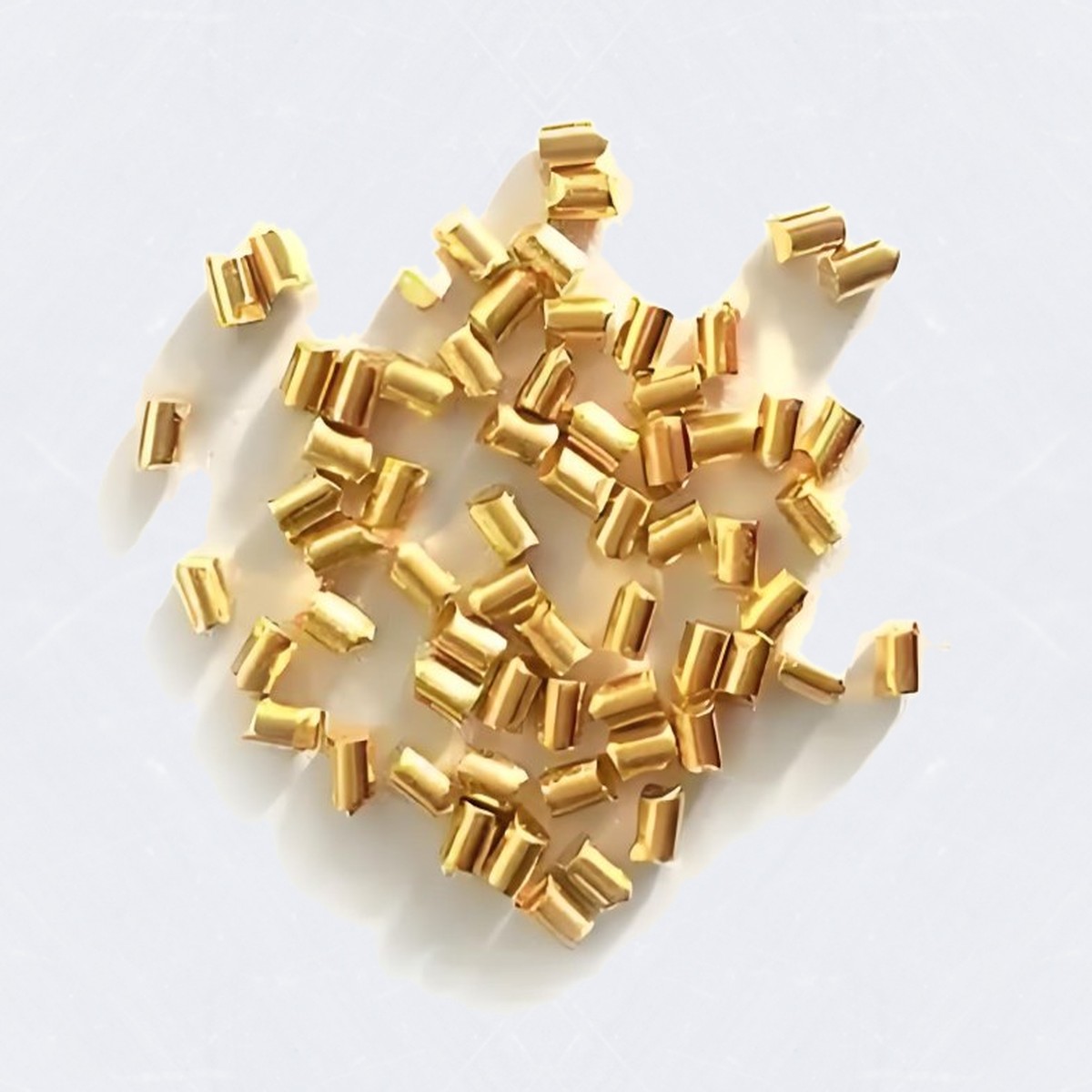
Gold does not oxidise, which makes it the easiest noble metal to evaporate and the most forgiving to store. It is used for contacts, infrared reflectors and decorative layers where the film must not change over time.
Specification
| Material | Gold (Au) |
|---|---|
| Purity | 4N – 5N |
| Melting point | 1064 °C |
| Density | 19.30 g/cm³ |
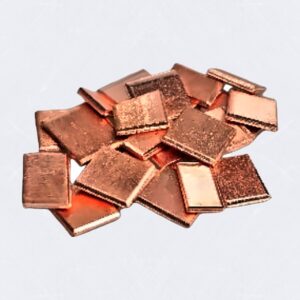
| Form | Pellets, granules or pieces; custom preforms to drawing |
| Packing | Vacuum-sealed, argon flushed; 1 kg per bag |
| MOQ | 100 g (samples from 10 g) |
| Lead time | 10–20 working days |
Evaporation notes
- Gold wets tungsten and molybdenum boats — use a graphite or BN liner for repeated runs.
- Low evaporation temperature; keep the rate steady to avoid spitting from a boiling pool.
- For decorative films, 4N is indistinguishable from 5N; higher grades matter for electrical layers.
End applications
- Electrical contacts and bond pads
- IR-reflective coatings
- Decorative and architectural films
- Semiconductor seed layers
Frequently asked
Does gold need a liner?
It is not strictly necessary, but gold alloys with tungsten boats and shortens their life. A graphite or BN liner is cheaper than replacing boats.
Can I reclaim the gold left in the liner?
Yes — the residual material can be refined. Keep the liner and its contents separate and labelled.
Related reading: e-beam evaporation materials guide · all high-purity evaporation materials
Related resources
- Applications — where this material is used, by industry.
- Deposition methods — e-beam vs thermal, liner choice, pre-melt and defect fixes.
- Crucible fill calculator — how much charge fits in the liner.
- Film material calculator — material needed for a given thickness.
Reviews
There are no reviews yet.