
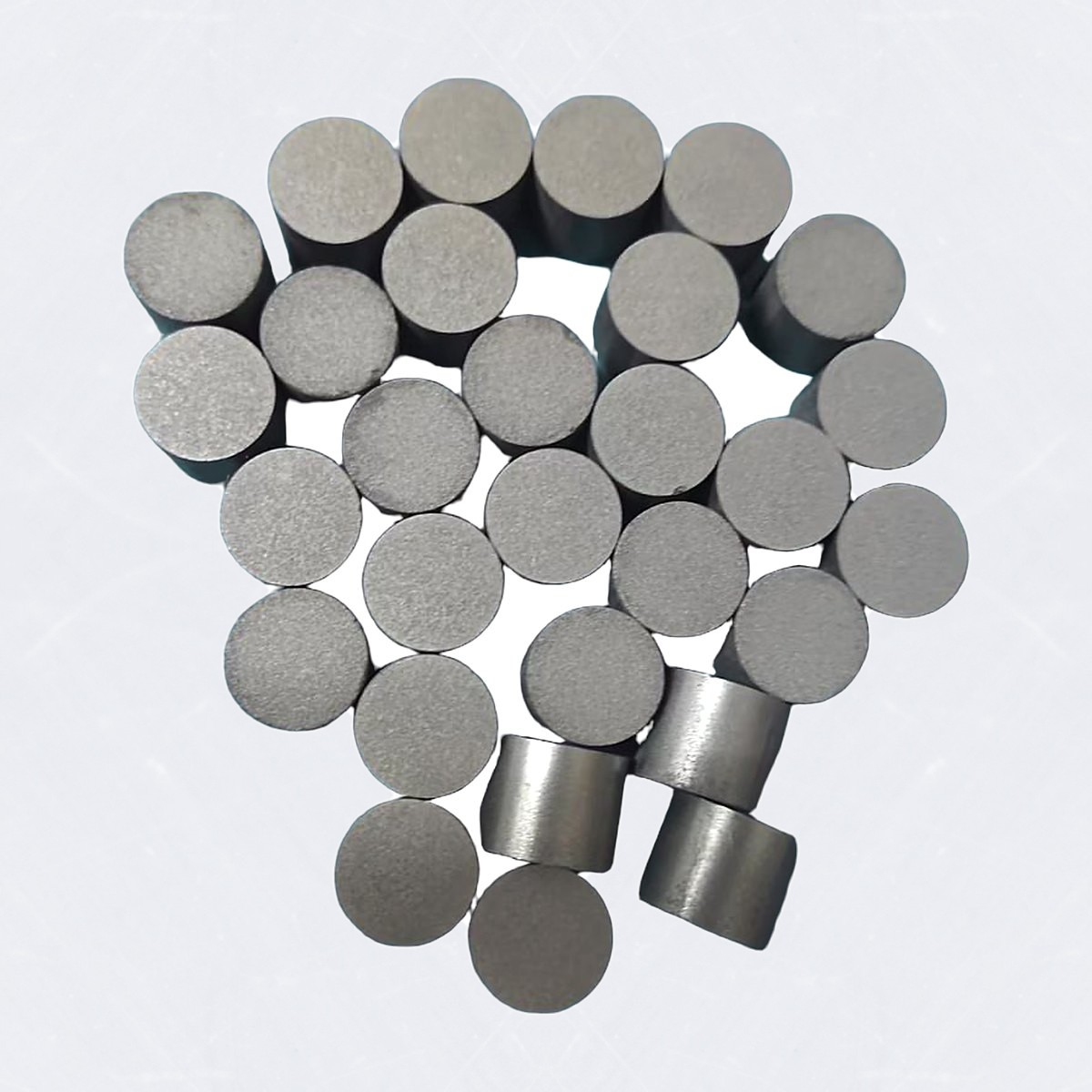
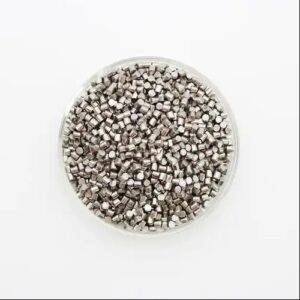
Rhenium has the second-highest melting point of any metal and is used for high-temperature films, electron emitters and as an alloying addition. It is one of the rarest metals in commercial use, so pellet form and utilisation matter.
Specification
| Material | Rhenium (Re) |
|---|---|
| Purity | 3N5 (99.95%) |
| Melting point | 3186 °C |
| Density | 21.02 g/cm³ |
| Form | Pellets, granules or pieces; custom preforms to drawing |
| Packing | Vacuum-sealed, argon flushed; 1 kg per bag |
| MOQ | 100 g (samples from 10 g) |
| Lead time | 10–20 working days |
Evaporation notes
- Very high melting point — e-beam at high power is required.
- Rhenium is scarce and expensive; small charges and efficient liners reduce waste.
- Oxygen contamination causes a brittle film and poor emission.
End applications
- High-temperature and emitter films
- Alloy additions (W-Re, Mo-Re)
- Electrical contact layers
- Aerospace and research coatings
Frequently asked
Why is rhenium so expensive?
It is one of the rarest elements in the crust and is recovered mainly as a by-product of molybdenum roasting.
What form do you supply?
Pellets and granules, 3N5, vacuum packed; small quantities from 10 g.
Related reading: e-beam evaporation materials guide · all high-purity evaporation materials
Related resources
- Applications — where this material is used, by industry.
- Deposition methods — e-beam vs thermal, liner choice, pre-melt and defect fixes.
- Crucible fill calculator — how much charge fits in the liner.
- Film material calculator — material needed for a given thickness.
Reviews
There are no reviews yet.