
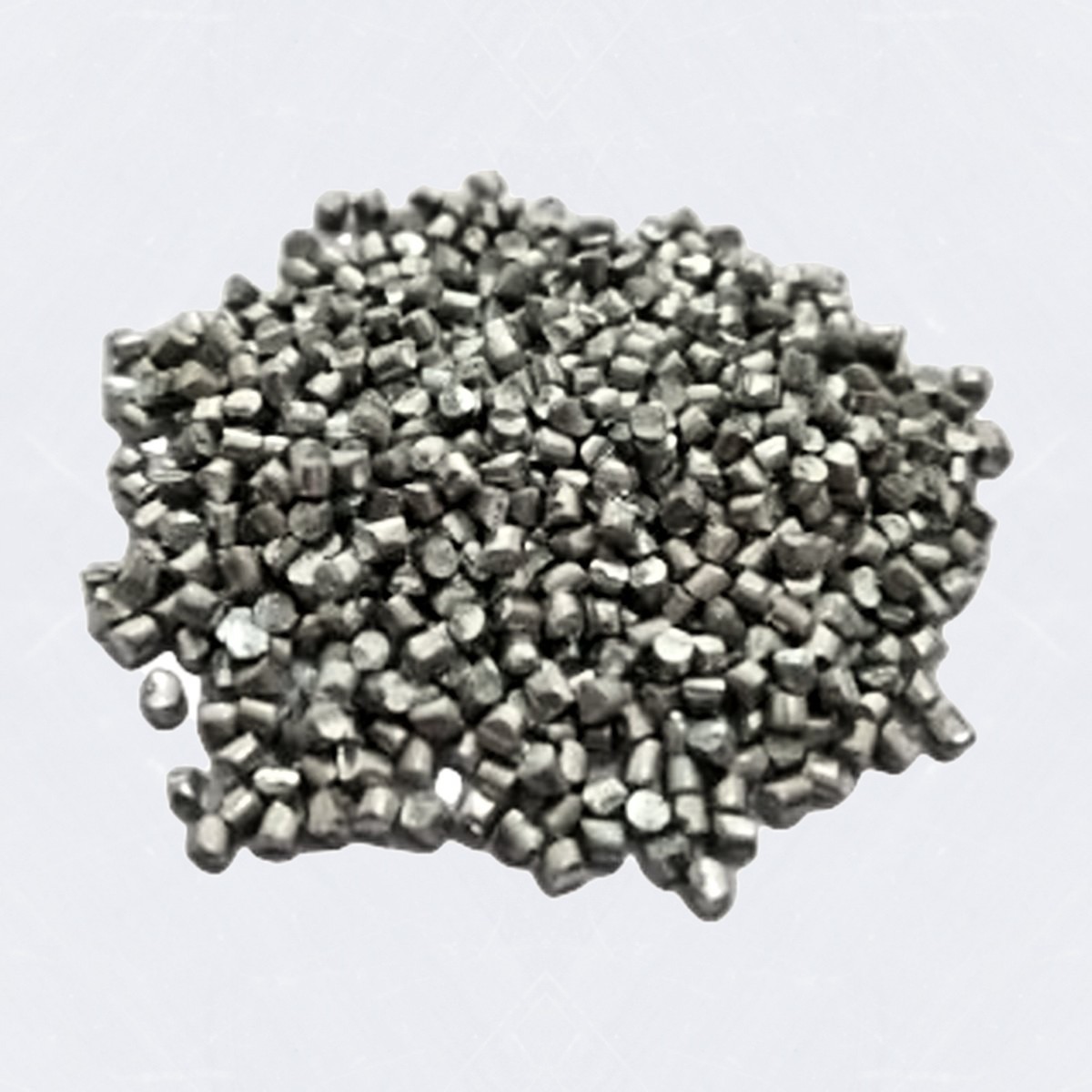
Molybdenum evaporates at high temperature but far below tungsten, which makes it the practical choice for barrier and electrode films. It is also the standard material for evaporation boats — the container and the material come from the same family.
Specification
| Material | Molybdenum (Mo) |
|---|---|
| Purity | 3N5 – 5N |
| Melting point | 2623 °C |
| Density | 10.22 g/cm³ |
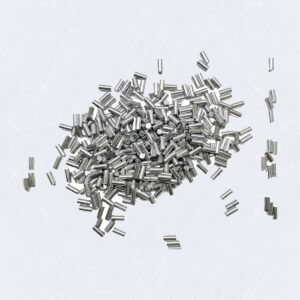
| Form | Pellets, granules or pieces; custom preforms to drawing |
| Packing | Vacuum-sealed, argon flushed; 1 kg per bag |
| MOQ | 100 g (samples from 10 g) |
| Lead time | 10–20 working days |
Evaporation notes
- E-beam is standard; thermal boats are not practical at this temperature.
- Molybdenum is a mild getter — degas before opening the shutter.
- For barrier films, oxygen content is the parameter that decides resistivity.
End applications
- Barrier and electrode films
- High-temperature coatings
- Backing and interlayer films
- Solar and display metallisation
Frequently asked
Why use molybdenum rather than tungsten?
Lower evaporation temperature and better machinability, at some cost in maximum service temperature.
Do you supply 5N molybdenum?
Yes — 5N is quoted for semiconductor work with a GDMS certificate.
Related reading: e-beam evaporation materials guide · all high-purity evaporation materials
Related resources
- Applications — where this material is used, by industry.
- Deposition methods — e-beam vs thermal, liner choice, pre-melt and defect fixes.
- Crucible fill calculator — how much charge fits in the liner.
- Film material calculator — material needed for a given thickness.
Reviews
There are no reviews yet.