
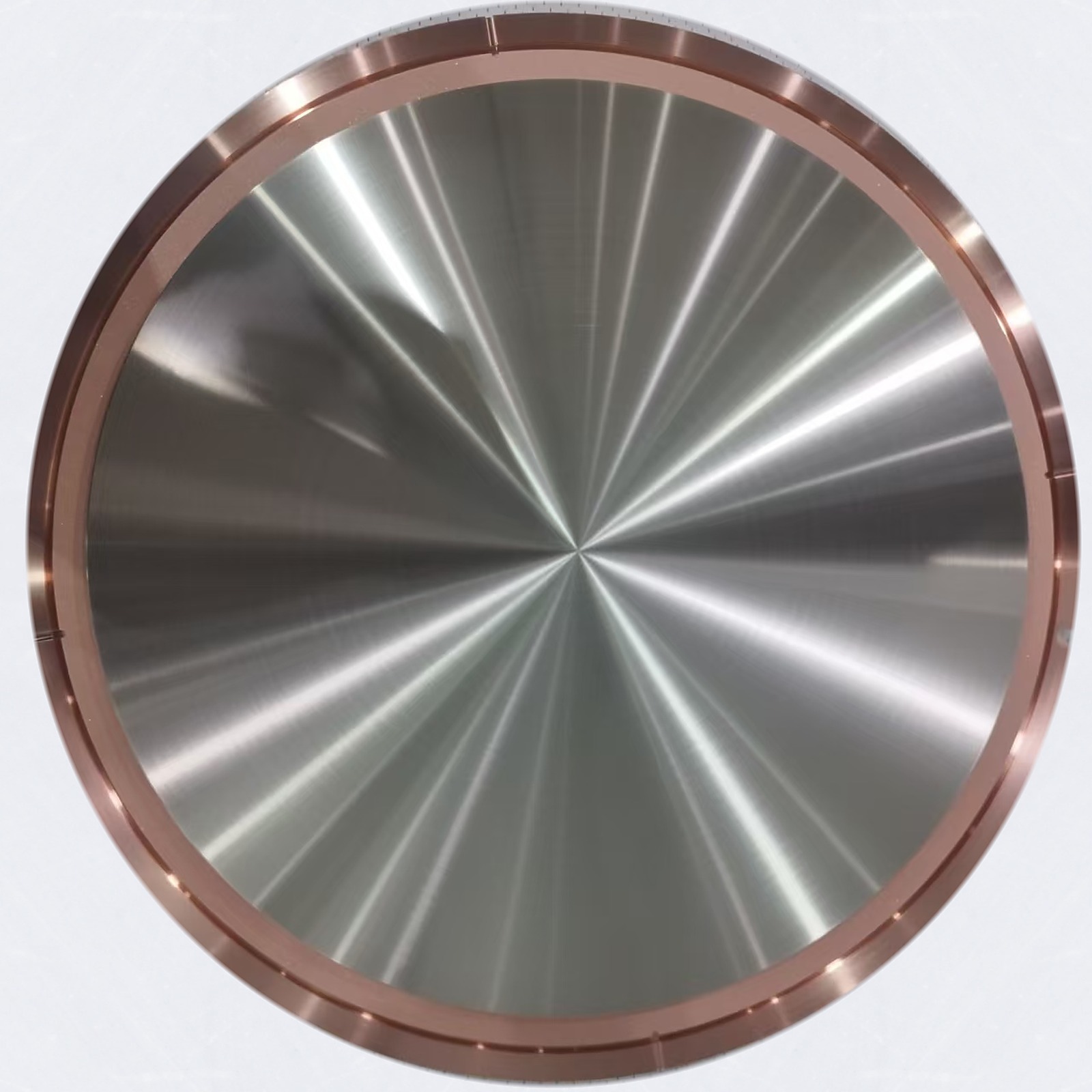
Silver has the lowest resistivity of any metal and the highest reflectance in the visible and infrared, which is why it carries most low-E and transparent-conductor stacks. It is also soft, mobile in a film stack and prone to oxidation at the surface — the three things that decide whether a silver layer survives.
Specification
| Material | Silver (Ag) |
|---|---|
| Purity | 4N (99.99%) · 5N on request |
| Density | 10.49 g/cm³ |
| Melting point | 962 °C |
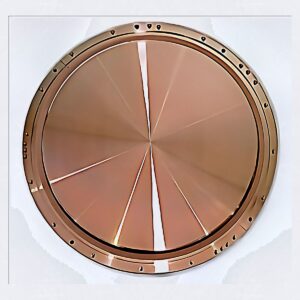
| Form | Discs 2″, 3″, 4″, 6″, 8″, 12″ · rectangular plates to drawing · rotatables on request |
| Grain / texture | Fine grain, controlled texture — stated on request |
| Bonding | Indium or elastomer to Cu / Al backing, bond coverage checked |
| Packing | Vacuum-sealed, foam-lined case with flatness record |
| MOQ | 1 pc |
| Lead time | 15–25 working days |
Sputtering notes
- Silver films agglomerate if annealed too hard; keep the substrate temperature modest.
- A thin oxide or nitride cap is normally needed on both sides of a silver layer to stop sulphur and oxygen attack.
- Target purity above 4N mainly reduces sulphur and chlorine, which cause hazy films.
End applications
- Low-E and solar-control glass
- Transparent conductive stacks
- Optical and mirror coatings
- Reflective contacts in LEDs
Frequently asked
Why does my silver film go hazy?
Usually sulphur or chlorine from the target or the chamber, or oxidation at the interfaces. Ask for the sulphur figure on the certificate.
Do you supply silver targets bonded to copper?
Yes — indium or elastomer bonded, with flatness and bond coverage checked before packing.
Related reading: target specification guide · all metal sputtering targets
Related resources
- Applications — where this material is used, by industry.
- Deposition methods — e-beam vs thermal, liner choice, pre-melt and defect fixes.
- Crucible fill calculator — how much charge fits in the liner.
- Film material calculator — material needed for a given thickness.
Reviews
There are no reviews yet.