
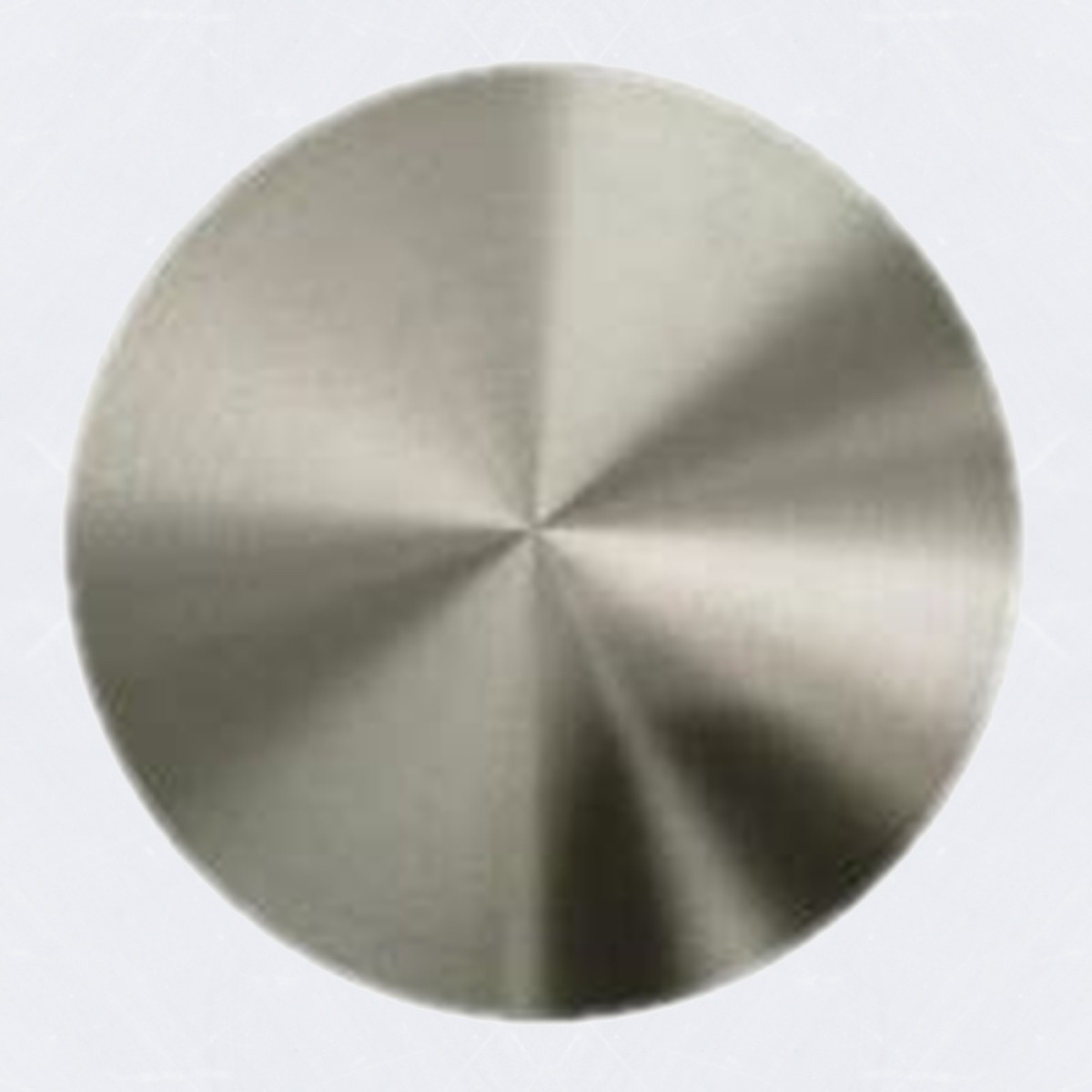
Iron targets are used mainly in magnetic stacks — FeCo, FeNi and FePt systems — and as a low-cost model material in thin-film research. In a magnetic stack the impurity that matters most is not iron but what else is in it: chromium, manganese and oxygen all shift the magnetic behaviour.
Specification
| Material | Iron (Fe) |
|---|---|
| Purity | 3N–4N5 (99.9–99.995%) |
| Density | 7.87 g/cm³ |
| Melting point | 1538 °C |
| Form | Discs 2″, 3″, 4″, 6″, 8″, 12″ · rectangular plates to drawing |
| Grain / texture | Fine grain; stated on request |
| Bonding | Indium or elastomer to Cu / Al backing, bond coverage checked |
| Packing | Vacuum-sealed, foam-lined case with flatness record |
| MOQ | 1 pc |
| Lead time | 15–25 working days |
Sputtering notes
- Ferromagnetic; expect a distorted erosion profile unless the cathode is compensated.
- Iron rusts — vacuum-sealed packing with desiccant is standard.
- For magnetic stacks, order the same lot as your partner layers so the compositions track.
End applications
- FeCo and FePt magnetic films
- Magnetic sensors and recording media
- Model systems in thin-film research
- Hard coatings in wear applications
Frequently asked
Why does my iron target rust in storage?
Iron oxidises in humid air. Keep the vacuum bag sealed until use; a surface oxide layer causes arcing and an inconsistent first run.
Related reading: target specification guide · all metal sputtering targets
Related resources
- Applications — where this material is used, by industry.
- Deposition methods — e-beam vs thermal, liner choice, pre-melt and defect fixes.
- Crucible fill calculator — how much charge fits in the liner.
- Film material calculator — material needed for a given thickness.

Reviews
There are no reviews yet.