
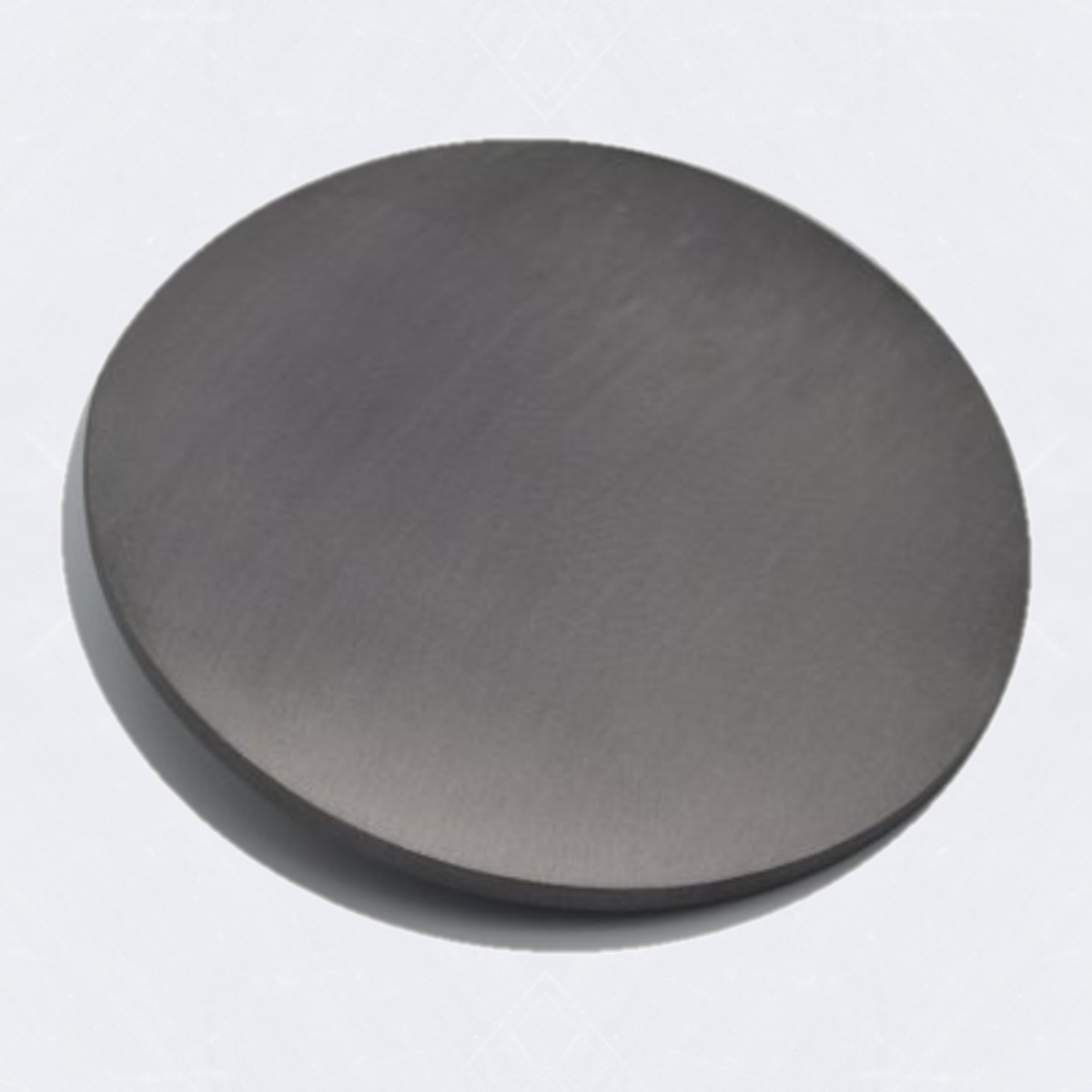
Cobalt oxide is an antiferromagnetic material used in exchange-bias stacks, in catalysis and in electrochromic devices. In spintronics the antiferromagnetic layer sets the bias direction, so film texture and stoichiometry both matter.
Specification
| Composition | CoO |
|---|---|
| Purity | 99.9% |
| Density | 6.44 g/cm³ |
| Melting point | 1935 °C |
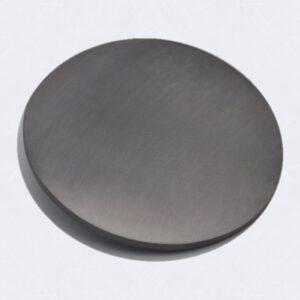
| Form | Discs 2″, 3″, 4″, 6″, 8″ · plates to drawing · rotatables on request |
| Bonding | Indium or elastomer to Cu backing; bond coverage checked |
| Packing | Vacuum-sealed, foam-lined case with density and stoichiometry report |
| MOQ | 1 pc |
| Lead time | 20–30 working days |
What decides the film
- Antiferromagnetic — the bias direction depends on texture and thickness.
- Stoichiometry affects the Neel temperature and the exchange bias field.
- CoO is an insulator; RF sputtering is normal.
End applications
- Exchange-bias layers in magnetic devices
- Catalyst films
- Electrochromic layers
- Lithium battery research
Frequently asked
Why use CoO rather than IrMn for exchange bias?
CoO is insulating and has a different blocking temperature; IrMn is a metal and switches differently. The choice depends on the device stack.
Do you supply Co3O4 as well?
Co3O4 is a separate product; both are quoted to the phase you specify.
Related reading: targets for optical coatings · ITO vs AZO vs IGZO · all ceramic targets
Related resources
- Applications — where this material is used, by industry.
- Deposition methods — e-beam vs thermal, liner choice, pre-melt and defect fixes.
- Crucible fill calculator — how much charge fits in the liner.
- Film material calculator — material needed for a given thickness.
Reviews
There are no reviews yet.