
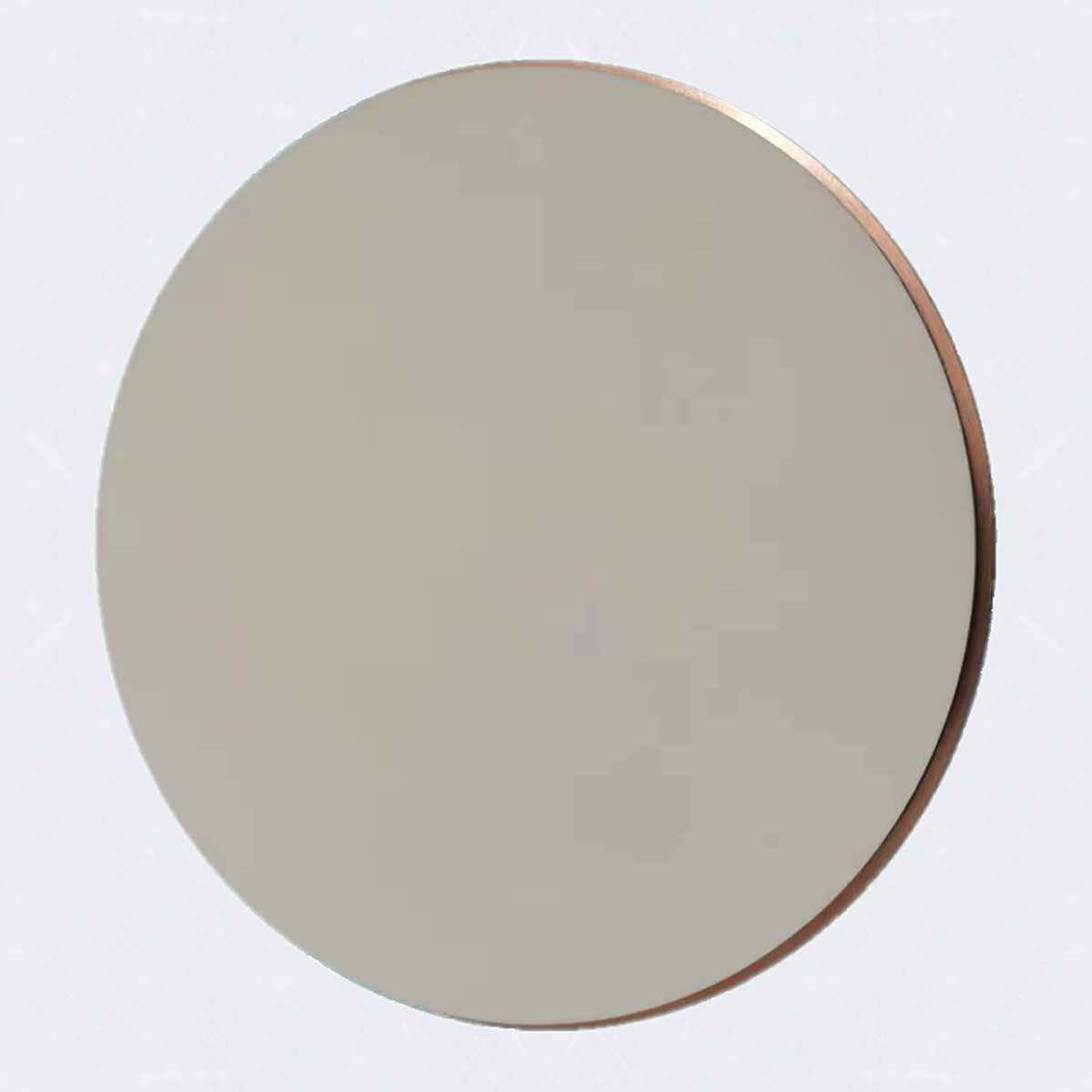
Magnesium oxide is used as a tunnel barrier in magnetic tunnel junctions, as a protective layer and as a secondary-electron emission layer in plasma displays. In MTJ work the barrier is 1–2 nm thick, so film continuity and stoichiometry are everything.
Specification
| Composition | MgO |
|---|---|
| Purity | 99.9% |
| Density | 3.58 g/cm³ |
| Melting point | 2852 °C |
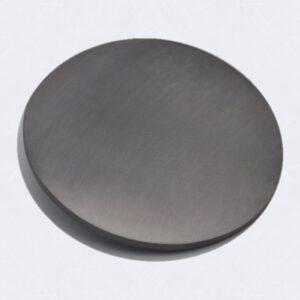
| Form | Discs 2″, 3″, 4″, 6″, 8″ · plates to drawing · rotatables on request |
| Bonding | Indium or elastomer to Cu backing; bond coverage checked |
| Packing | Vacuum-sealed, foam-lined case with density and stoichiometry report |
| MOQ | 1 pc |
| Lead time | 20–30 working days |
What decides the film
- For MTJ barriers, thickness uniformity at 1–2 nm is the entire specification.
- MgO is hygroscopic — targets must be stored dry and used promptly after opening.
- Very high melting point; dense targets require hot pressing.
End applications
- Tunnel barriers in magnetic tunnel junctions
- Protective and passivation layers
- Secondary electron emission layers
- Buffer layers for oxide growth
Frequently asked
Why does MgO degrade in storage?
It reacts with moisture to form Mg(OH)2. Keep targets sealed with desiccant and avoid long exposure to air.
Can you supply very thin MgO for MTJ work?
We supply the target; the barrier thickness is set by your process. Density and surface finish are the parameters that matter.
Related reading: targets for optical coatings · ITO vs AZO vs IGZO · all ceramic targets
Related resources
- Applications — where this material is used, by industry.
- Deposition methods — e-beam vs thermal, liner choice, pre-melt and defect fixes.
- Crucible fill calculator — how much charge fits in the liner.
- Film material calculator — material needed for a given thickness.
Reviews
There are no reviews yet.