
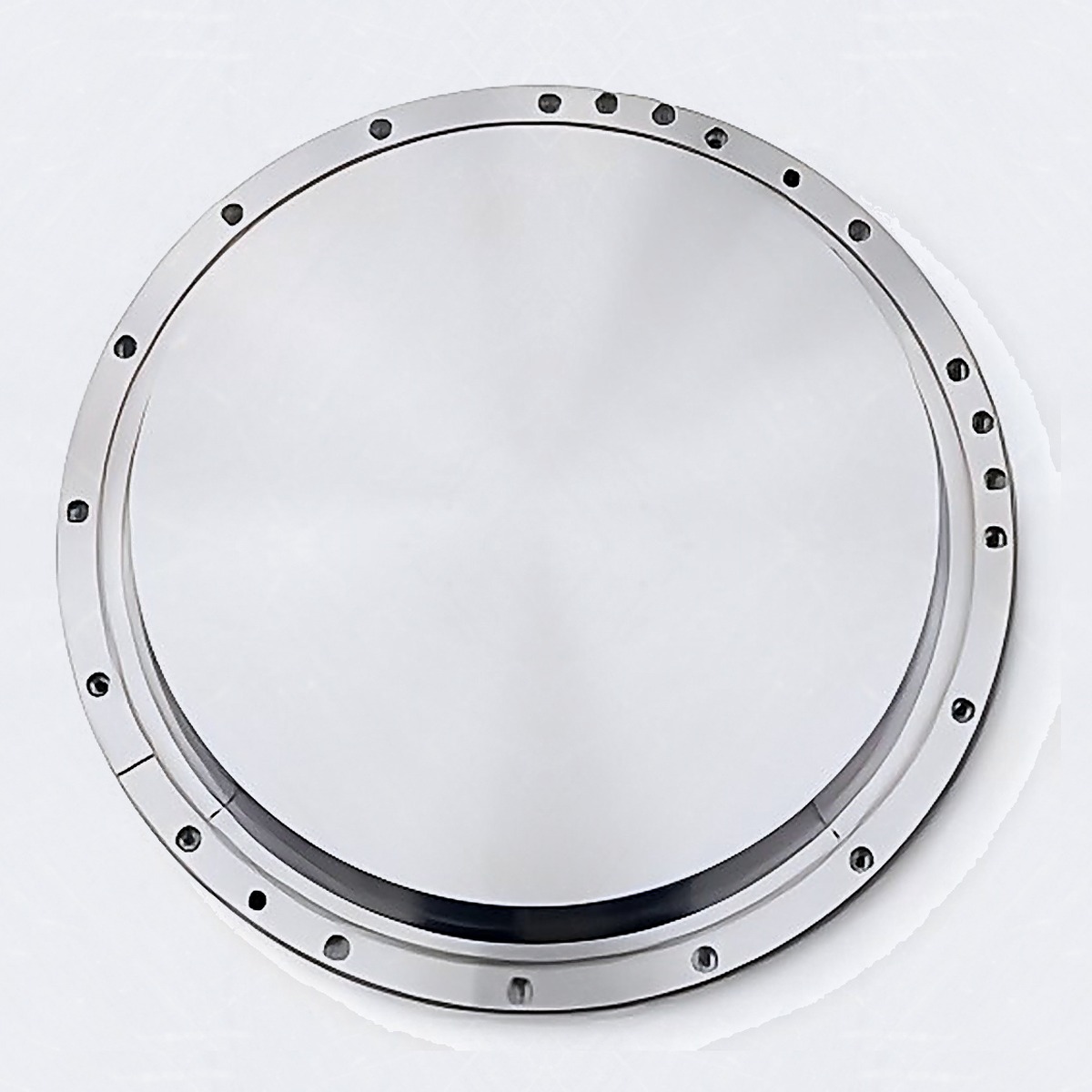
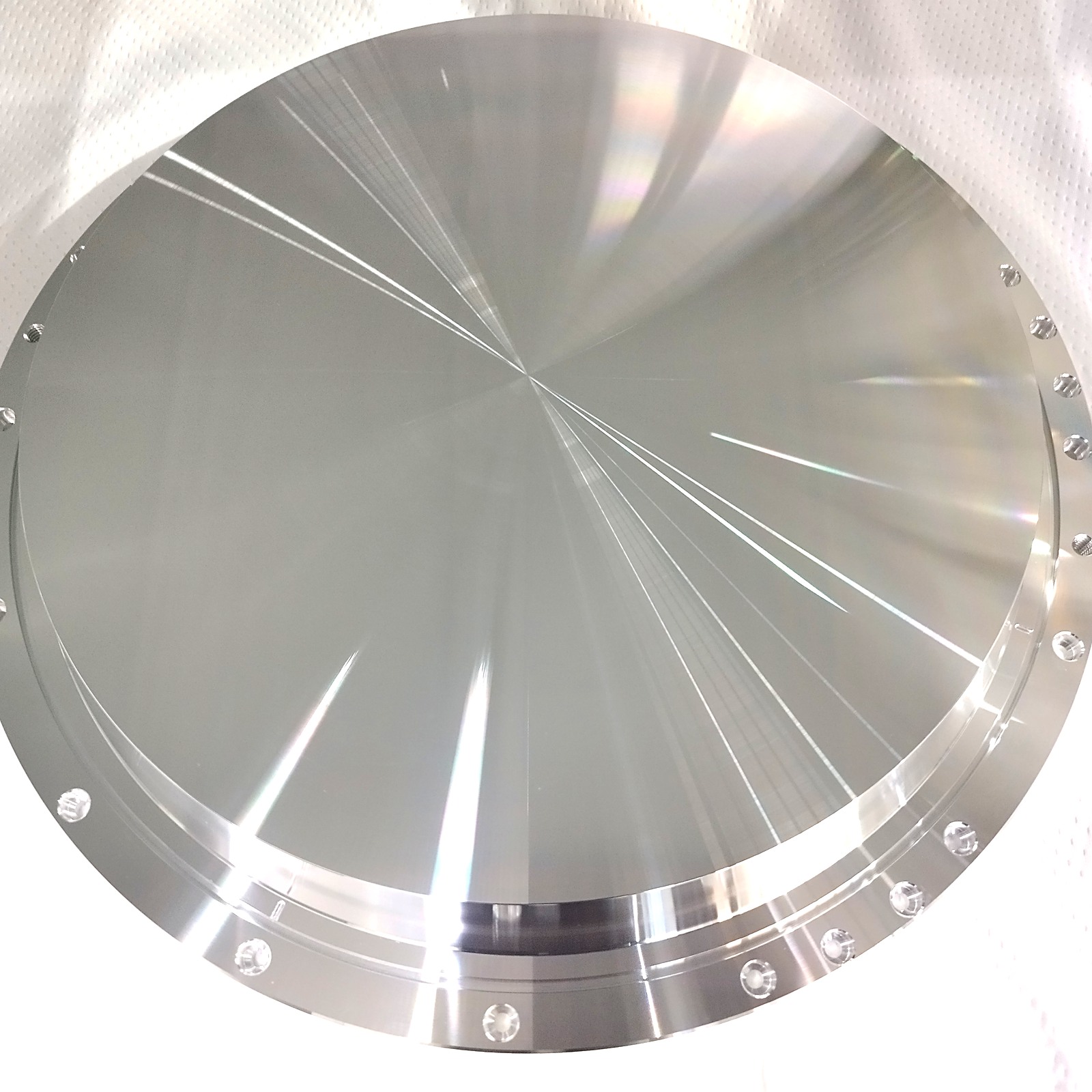
Aluminium targets cover the widest range of uses of any metal: reflective coatings, decorative trim, capacitor electrodes and, at higher purity, semiconductor metallisation. The difference between a good and a poor aluminium film is usually oxygen and grain structure rather than the last nine of purity.
Specification
| Material | Aluminium (Al) |
|---|---|
| Purity | 4N (99.99%) – 5N5 (99.9995%) |
| Density | 2.70 g/cm³ |
| Melting point | 660 °C |
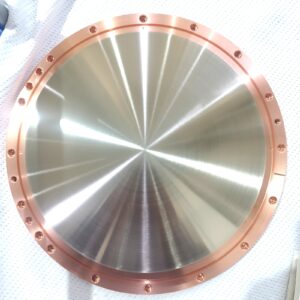
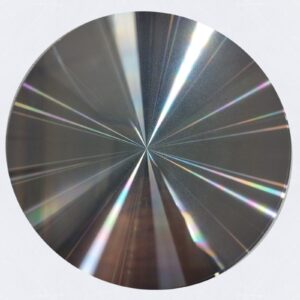
| Form | Discs 2″, 3″, 4″, 6″, 8″, 12″ · rectangular plates to drawing · rotatables on request |
| Grain / texture | Fine grain, controlled texture — stated on request |
| Bonding | Indium or elastomer to Cu / Al backing, bond coverage checked |
| Packing | Vacuum-sealed, foam-lined case with flatness record |
| MOQ | 1 pc |
| Lead time | 15–25 working days |
Sputtering notes
- Aluminium is soft and galls; target surfaces are machined to a fine finish to limit particle generation.
- Oxide inclusions cause arcing — 4N with low oxygen often outperforms a nominal 5N with a poor melt.
- For semiconductor use, specify grain size and texture; for decorative work, purity above 4N adds little.
End applications
- Reflective and mirror coatings
- Decorative and packaging metallisation
- Semiconductor metallisation (5N+)
- Capacitor and display electrodes
Frequently asked
Why does my aluminium target arc?
Usually oxide inclusions or a poorly bonded target with hot spots. Ask for the oxygen figure and the bond coverage.
Do I need 5N5 for optical work?
For high-reflectance mirrors, yes — trace metals raise absorption. For decorative films, 4N is enough.
Related reading: target specification guide · all metal sputtering targets
Related resources
- Applications — where this material is used, by industry.
- Deposition methods — e-beam vs thermal, liner choice, pre-melt and defect fixes.
- Crucible fill calculator — how much charge fits in the liner.
- Film material calculator — material needed for a given thickness.
Reviews
There are no reviews yet.