
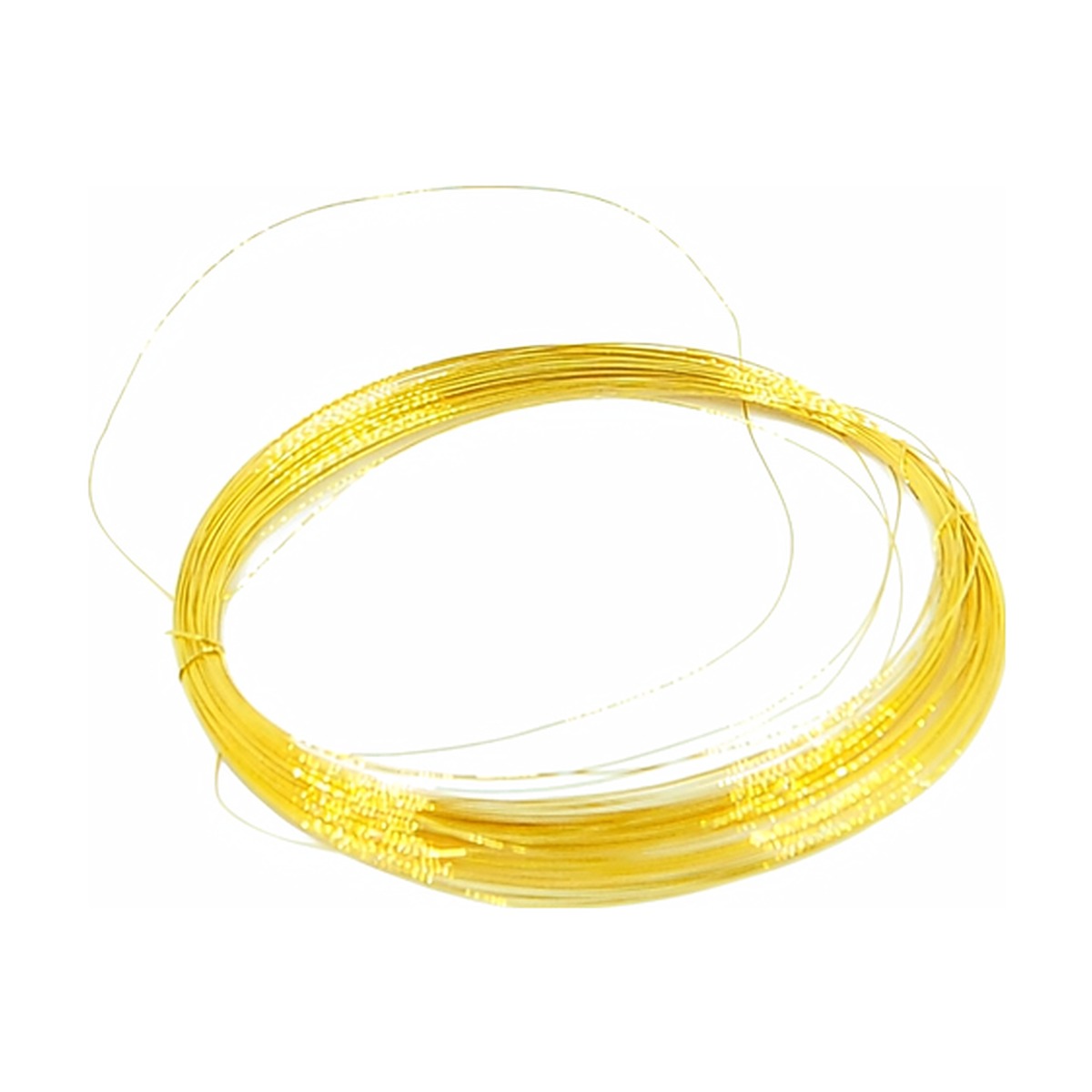
Gold wire in 4N (99.99%) purity, drawn down to 0.025 mm (1 mil) and up to 6.0 mm. Supplied annealed on spools, for bonding, evaporation feed and precision joining. Gold does not oxidise, which is why a 1 mil wire can sit in storage for a year and still bond the same way.
Specification
| Metal | Gold (Au) |
|---|---|
| Purity | 4N (99.99%) |
| Form | Wire |
| Dimensions | Ø 0.025–6.0 mm; standard 0.25 / 0.5 / 1.0 mm; spools of 10 g, 50 g or 100 g |
| Density | 19.30 g/cm³ |
| Melting point | 1064 °C |
| Packing | Vacuum-sealed, argon flushed; spool or flat pack in a foam-lined case |
| MOQ | 100 g (samples from 10 g) |
| Lead time | 10–20 working days |
Tolerances and handling
- Fine sizes are annealed and spooled under tension; store sealed to avoid mechanical damage rather than oxidation.
- For bonding, specify the elongation and breaking-load window your machine expects — we quote against it.
- Larger diameters (above 2 mm) are supplied straight or in coils, not on spools.
End applications
- Thermosonic and ultrasonic bonding
- Evaporation feed wire for e-beam and thermal sources
- Precision joining and brazing
- Thermocouple and sensor leads
Frequently asked
What is the finest gold wire you can supply?
0.025 mm (1 mil), the finest bonding gauge in commercial use. Smaller sizes are possible on request but are not standard.
Is the wire annealed?
Yes — fine sizes are supplied annealed. Hard-drawn wire is available if your process needs it.
Related reading: all wire, foil and solder products · high-purity evaporation materials
Related resources
- Applications — where this material is used, by industry.
- Deposition methods — e-beam vs thermal, liner choice, pre-melt and defect fixes.
- Crucible fill calculator — how much charge fits in the liner.
- Film material calculator — material needed for a given thickness.
Reviews
There are no reviews yet.