
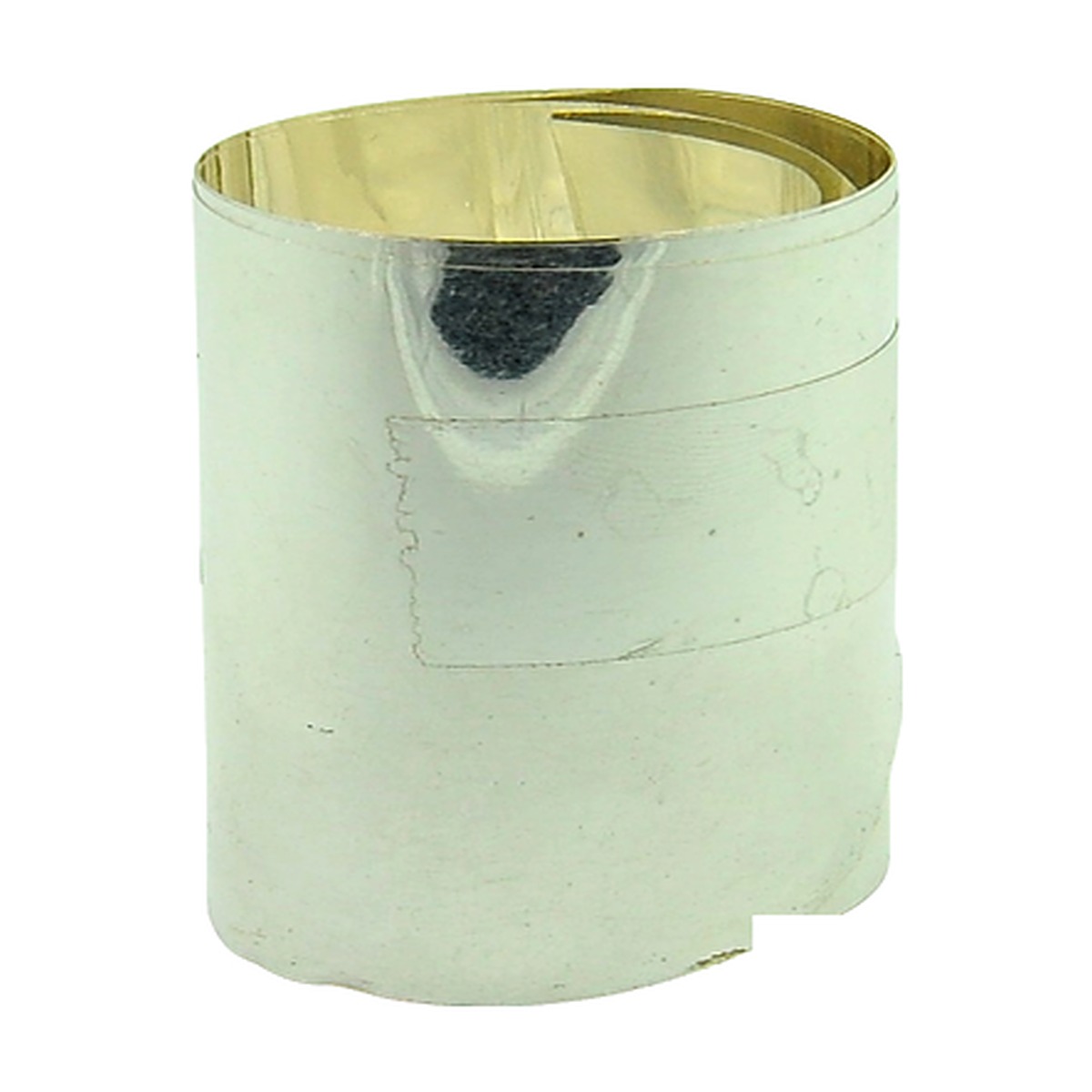
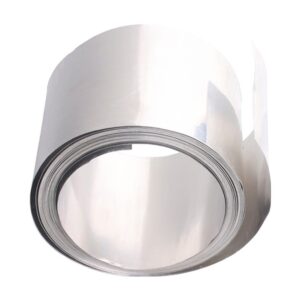
Silver foil in 4N purity from 0.02 mm, for contacts, EMI gaskets and evaporation sources. Silver has the lowest resistivity of any metal, so a thin foil carries more current than a copper one of the same thickness.
Specification
| Metal | Silver (Ag) |
|---|---|
| Purity | 4N (99.99%) |
| Form | Foil |
| Dimensions | Thickness 0.02–0.5 mm; width 10–100 mm; cut pieces |
| Density | 10.49 g/cm³ |
| Melting point | 962 °C |
| Packing | Vacuum-sealed, argon flushed; spool or flat pack in a foam-lined case |
| MOQ | 100 g (samples from 10 g) |
| Lead time | 10–20 working days |
Tolerances and handling
- Silver foil work-hardens quickly; specify whether you need annealed or hard temper.
- Thin foil below 0.05 mm is fragile — flat packing, not coiling.
- Sulphur in packaging materials can tarnish the surface; use sulphur-free interleaving.
End applications
- Electrical contacts and busbar shims
- EMI shielding gaskets
- Evaporation source for low-E and optical coatings
- Brazing foil for ceramic-to-metal seals
Frequently asked
Can silver foil be soldered?
Yes, but silver dissolves in tin-based solders. Use a silver-bearing solder or a nickel barrier if the joint must survive multiple reflows.
What widths are available?
10–100 mm standard; wider on request up to 200 mm.
Related reading: all wire, foil and solder products · high-purity evaporation materials
Related resources
- Applications — where this material is used, by industry.
- Deposition methods — e-beam vs thermal, liner choice, pre-melt and defect fixes.
- Crucible fill calculator — how much charge fits in the liner.
- Film material calculator — material needed for a given thickness.
Reviews
There are no reviews yet.