
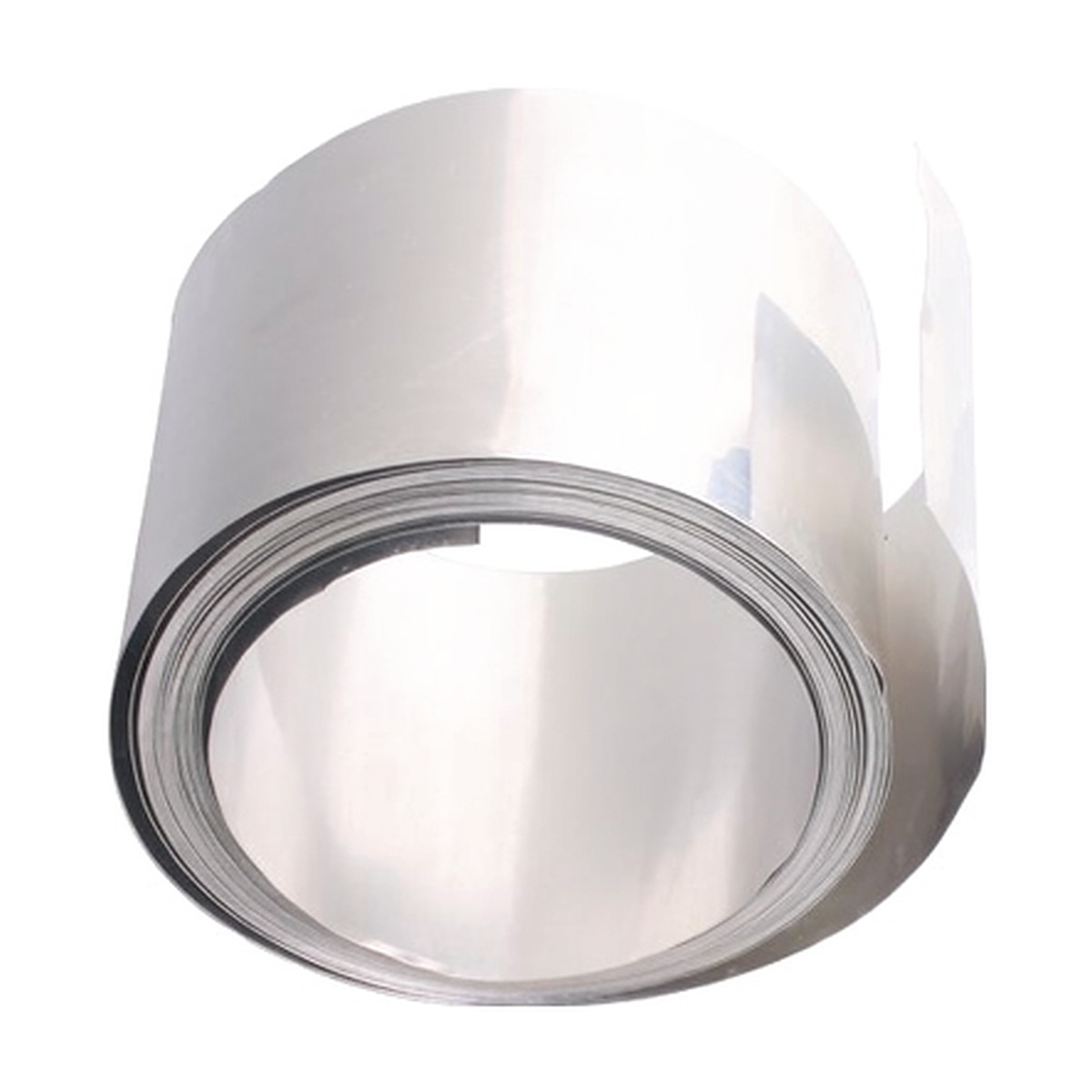
High-purity aluminium foil at 5N (99.999%), from 0.02 mm, for evaporation sources and thin-film metallisation. The high-purity grade matters where the film is optical or electrical: trace iron and silicon in 4N foil show up as absorption and as residues in the film.
Specification
| Metal | Aluminium (Al) |
|---|---|
| Purity | 5N (99.999%) |
| Form | Foil |
| Dimensions | Thickness 0.02–0.5 mm; width 10–200 mm; cut pieces |
| Density | 2.70 g/cm³ |
| Melting point | 660 °C |
| Packing | Vacuum-sealed, argon flushed; spool or flat pack in a foam-lined case |
| MOQ | By agreement — quoted per order |
| Lead time | 10–20 working days |
Tolerances and handling
- Thin high-purity foil is soft and creases easily — flat packing only.
- For evaporation, foil is usually cut into discs or squares that fit the liner.
- Specify the surface finish if the foil is used as a substrate or reflector.
End applications
- Evaporation source for optical and electronic films
- Thin-film metallisation
- Battery and capacitor research
- High-purity sample substrates
Frequently asked
Can I use 5N foil in a thermal boat?
Yes, but aluminium wets the boat; a BN or graphite liner is the practical choice.
What widths do you supply?
10–200 mm; cut pieces to drawing.
Related reading: all wire, foil and solder products · high-purity evaporation materials
Related resources
- Applications — where this material is used, by industry.
- Deposition methods — e-beam vs thermal, liner choice, pre-melt and defect fixes.
- Crucible fill calculator — how much charge fits in the liner.
- Film material calculator — material needed for a given thickness.
Reviews
There are no reviews yet.