
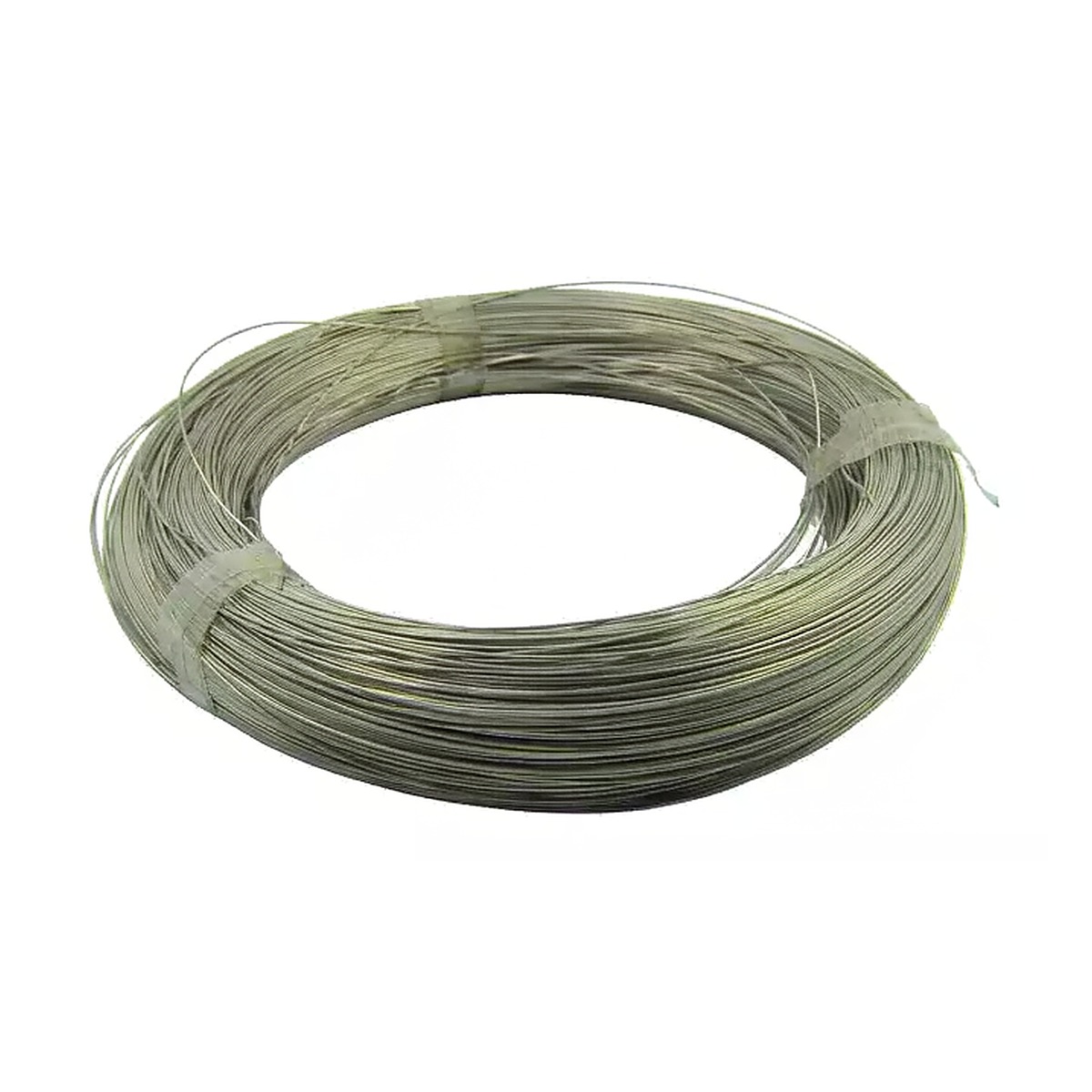
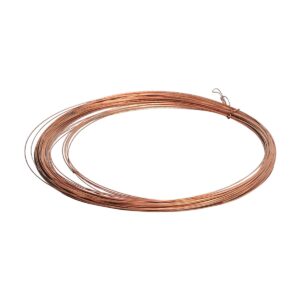
Titanium wire at 3N5 purity, from 0.5 mm to 5.0 mm, annealed and supplied in coils. Titanium combines low density with high corrosion resistance, and in vacuum work it doubles as a getter — it absorbs residual gas at temperature.
Specification
| Metal | Titanium (Ti) |
|---|---|
| Purity | 3N5 (99.95%) |
| Form | Wire |
| Dimensions | Ø 0.5–5.0 mm; annealed; coils of 0.5–5 kg |
| Density | 4.51 g/cm³ |
| Melting point | 1668 °C |
| Packing | Vacuum-sealed, argon flushed; spool or flat pack in a foam-lined case |
| MOQ | By agreement — quoted per order |
| Lead time | 10–20 working days |
Tolerances and handling
- Titanium wire is supplied annealed; cold-working it makes it springy and difficult to form.
- For getter use, clean the surface before installation — oxide and handling contamination reduce capacity.
- Titanium galls badly when threaded; use a lubricant or a different fastener material.
End applications
- Corrosion-resistant fixtures and fasteners
- Getter and degassing elements
- Evaporation and sputtering feedstock
- Medical and aerospace prototypes
Frequently asked
Can titanium wire be used as a getter?
Yes, in vacuum devices. It absorbs oxygen, nitrogen and hydrogen at elevated temperature; the surface must be clean.
What is the maximum diameter?
5.0 mm for standard supply; larger sizes are supplied as rod.
Related reading: all wire, foil and solder products · high-purity evaporation materials
Related resources
- Applications — where this material is used, by industry.
- Deposition methods — e-beam vs thermal, liner choice, pre-melt and defect fixes.
- Crucible fill calculator — how much charge fits in the liner.
- Film material calculator — material needed for a given thickness.
Reviews
There are no reviews yet.