
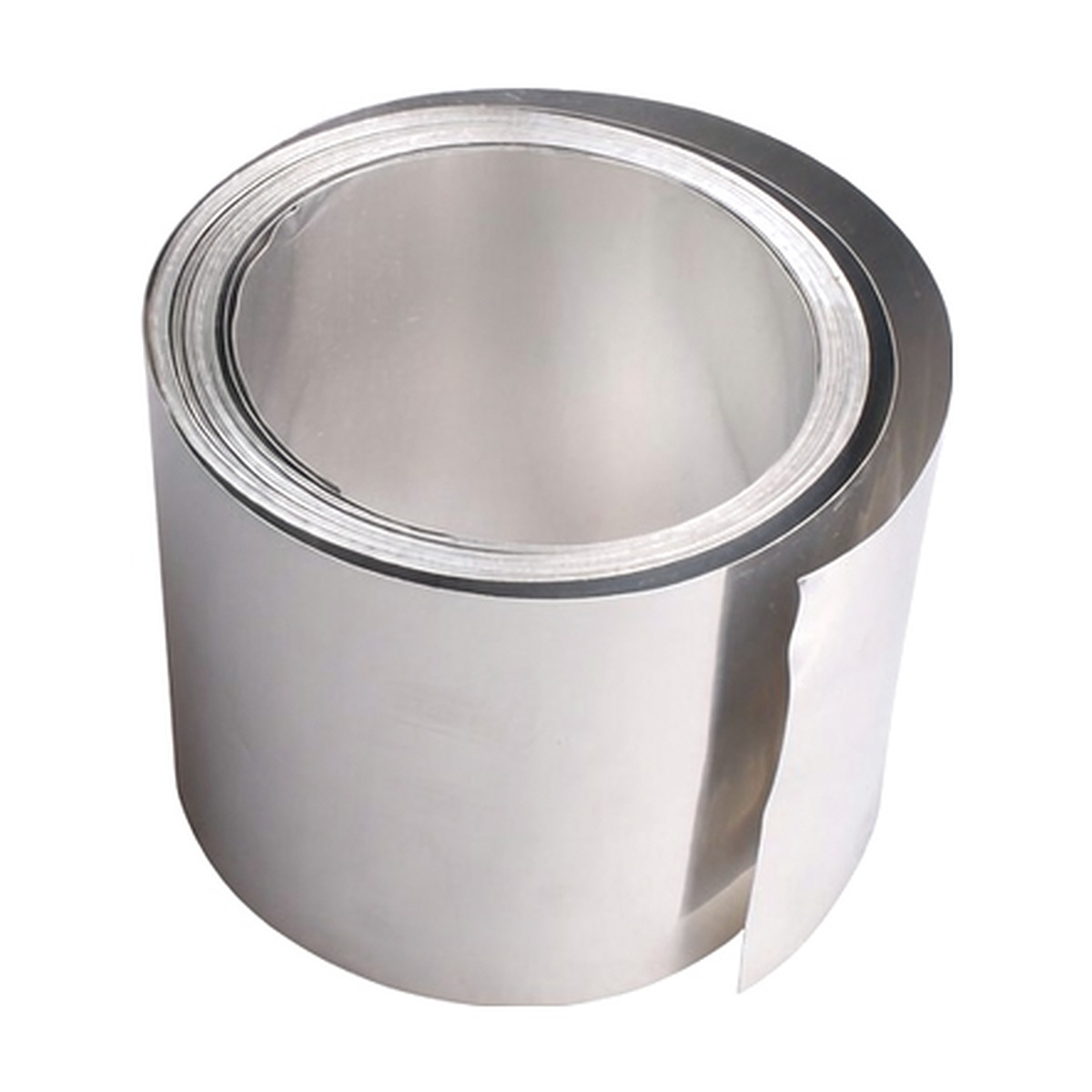
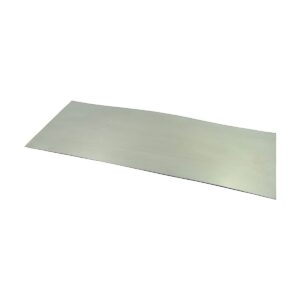
Aluminium foil at 3N5 (99.95%) from 0.01 mm, the general-purpose grade for metallisation, packaging barriers and capacitor electrodes. Where the foil is a barrier or a reflector rather than a device layer, 3N5 gives the same optical result as higher grades at lower cost.
Specification
| Metal | Aluminium (Al) |
|---|---|
| Purity | 3N5 (99.95%) |
| Form | Foil |
| Dimensions | Thickness 0.01–0.5 mm; standard 0.05 / 0.1 mm; width 10–300 mm |
| Density | 2.70 g/cm³ |
| Melting point | 660 °C |
| Packing | Vacuum-sealed, argon flushed; spool or flat pack in a foam-lined case |
| MOQ | By agreement — quoted per order |
| Lead time | 10–20 working days |
Tolerances and handling
- Foil below 0.02 mm is pinhole-prone — specify the barrier requirement, not just the thickness.
- Rolled foil has a bright and a matte side; the bright side is usually the functional one.
- For capacitor use, specify the surface roughness as well as the thickness.
End applications
- Metallisation and packaging barrier layers
- Capacitor electrodes
- Evaporation and sputtering feedstock
- Bonding and heat-transfer shims
Frequently asked
What is the difference between bright and matte side?
The bright side contacts the polished roll during rolling; the matte side is rougher. Adhesion and optical behaviour differ.
Is the foil annealed?
Standard supply is soft-temper (annealed); hard-temper is available on request.
Related reading: all wire, foil and solder products · high-purity evaporation materials
Related resources
- Applications — where this material is used, by industry.
- Deposition methods — e-beam vs thermal, liner choice, pre-melt and defect fixes.
- Crucible fill calculator — how much charge fits in the liner.
- Film material calculator — material needed for a given thickness.
Reviews
There are no reviews yet.