
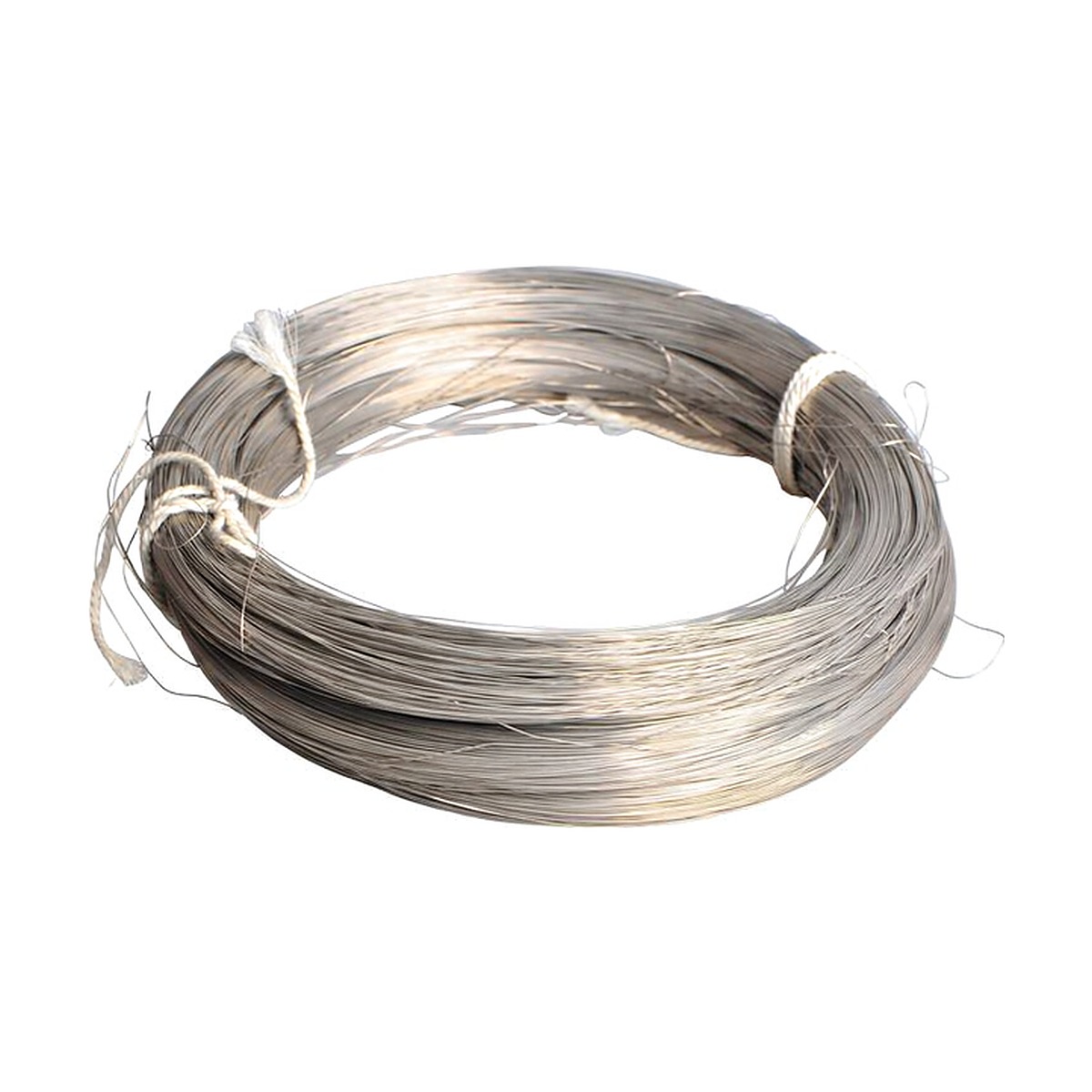
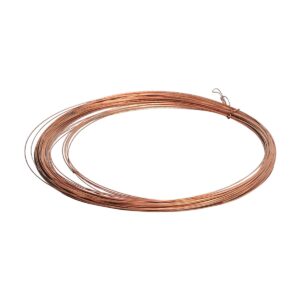
Nickel wire at 3N5 purity, from 0.1 mm to 3.0 mm, for heating elements, electrodes and evaporation feed. Nickel resists oxidation up to about 600 °C, which is what makes it the standard resistance-wire material below that temperature.
Specification
| Metal | Nickel (Ni) |
|---|---|
| Purity | 3N5 (99.95%) |
| Form | Wire |
| Dimensions | Ø 0.1–3.0 mm; coils or straight lengths |
| Density | 8.90 g/cm³ |
| Melting point | 1455 °C |
| Packing | Vacuum-sealed, argon flushed; spool or flat pack in a foam-lined case |
| MOQ | By agreement — quoted per order |
| Lead time | 10–20 working days |
Tolerances and handling
- For heating elements, specify the resistivity and the operating temperature — the alloy choice matters more than purity.
- Nickel wire is ferromagnetic; keep it away from magnetic tooling if the parts must remain unmagnetised.
- Sulphur in the wire causes embrittlement at temperature; ask for the sulphur figure.
End applications
- Heating elements and resistance wire
- Electrodes and lead wires
- Evaporation feedstock
- Battery and fuel-cell hardware
Frequently asked
Can nickel wire be used as a thermocouple leg?
Yes — nickel is one leg of type K (with chromel) in some constructions; the standard type K legs are NiCr and NiAl alloys.
Do you supply Ni200 or Ni201 grade?
We supply 3N5 nickel; commercial Ni200/Ni201 equivalents are quoted against the specification.
Related reading: all wire, foil and solder products · high-purity evaporation materials
Related resources
- Applications — where this material is used, by industry.
- Deposition methods — e-beam vs thermal, liner choice, pre-melt and defect fixes.
- Crucible fill calculator — how much charge fits in the liner.
- Film material calculator — material needed for a given thickness.
Reviews
There are no reviews yet.