
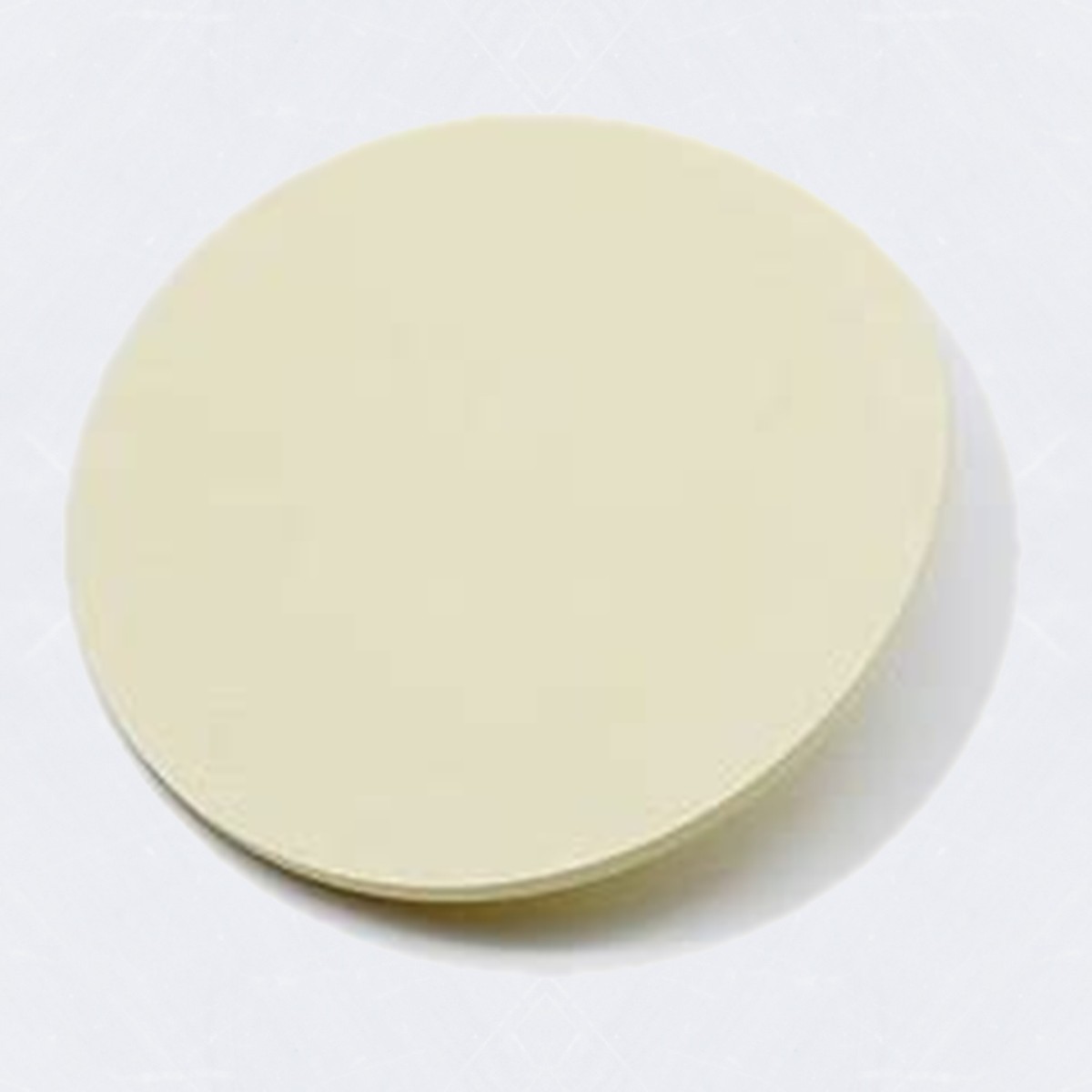
Indium oxide targets are used where a stoichiometric In2O3 film is needed — as a base layer for ITO, in some sensor stacks and in research on transparent electronics. Indium content makes the target expensive, so utilisation and reclaim are part of the cost calculation.
Specification
| Composition | In2O3 |
|---|---|
| Purity | 99.99% |
| Density | 7.18 g/cm³ |
| Melting point | 1910 °C |
| Form | Discs 2″, 3″, 4″, 6″, 8″ · plates to drawing · rotatables on request |
| Bonding | Indium or elastomer to Cu backing; bond coverage checked |
| Packing | Vacuum-sealed, foam-lined case with density and stoichiometry report |
| MOQ | 1 pc |
| Lead time | 20–30 working days |
What decides the film
- High indium content — target utilisation and reclaim matter more than sputter rate.
- Oxygen stoichiometry in the target affects film transparency and carrier concentration.
- Bonding is standard; unbonded In2O3 cracks under thermal cycling.
End applications
- Base layers for ITO stacks
- Transparent semiconductor research
- Gas and humidity sensors
- Optical films
Frequently asked
What is the difference between In2O3 and ITO targets?
ITO is tin-doped indium oxide (90/10 wt%) and is a conductor; In2O3 is the undoped oxide used as a base or research layer.
Can you reclaim indium from spent targets?
We can quote refining against the returned weight; value depends on residual indium content.
Related reading: targets for optical coatings · ITO vs AZO vs IGZO · all ceramic targets
Related resources
- Applications — where this material is used, by industry.
- Deposition methods — e-beam vs thermal, liner choice, pre-melt and defect fixes.
- Crucible fill calculator — how much charge fits in the liner.
- Film material calculator — material needed for a given thickness.
Reviews
There are no reviews yet.