
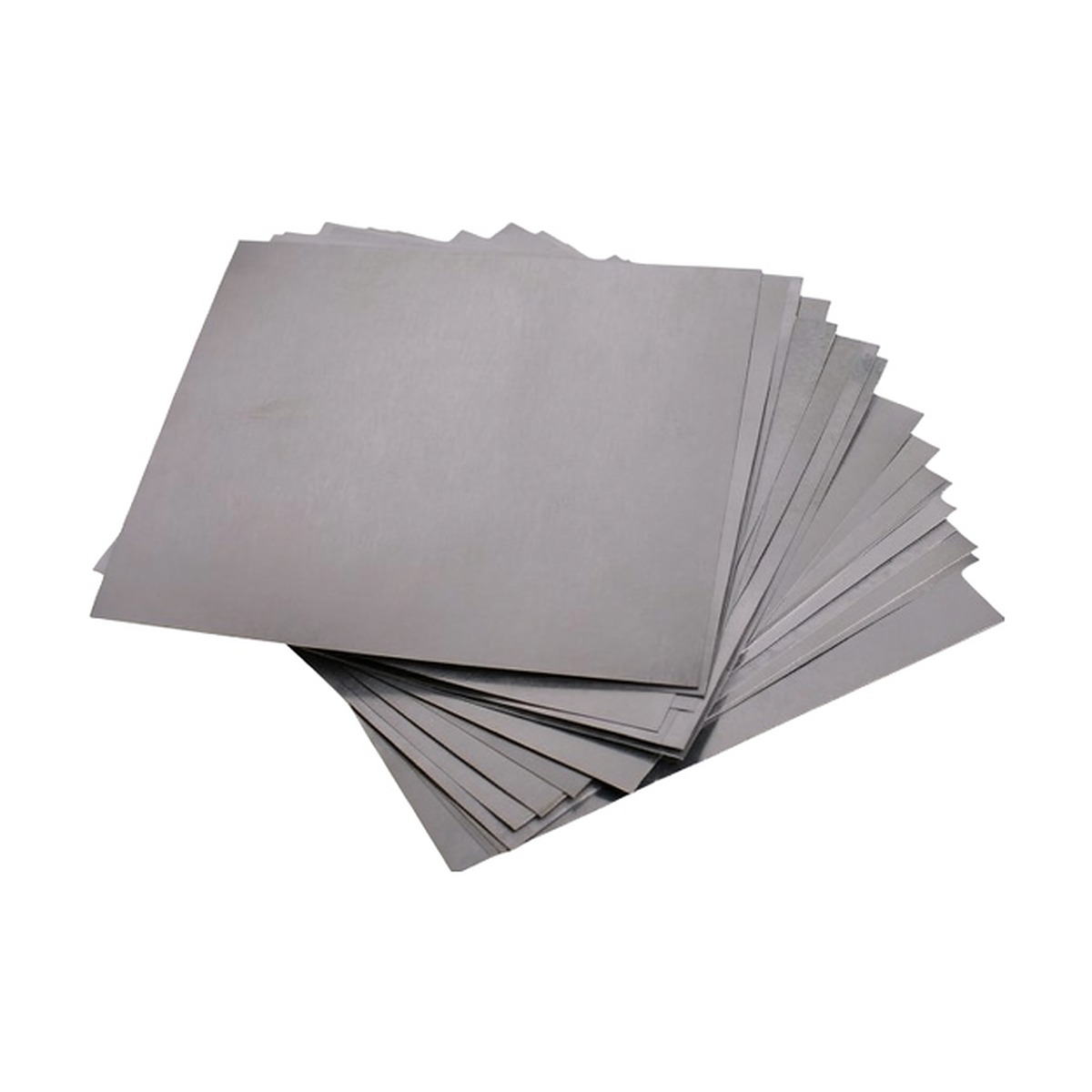
Indium foil at 4N purity from 0.05 mm, for target bonding, vacuum gaskets and thermal interfaces. The foil form is the standard for indium bonding because it gives a controlled, uniform bond line — much more repeatable than pressing wire.
Specification
| Metal | Indium (In) |
|---|---|
| Purity | 4N (99.99%) |
| Form | Foil |
| Dimensions | Thickness 0.05–1.0 mm; width 10–100 mm; cut pieces |
| Density | 7.31 g/cm³ |
| Melting point | 156.6 °C |
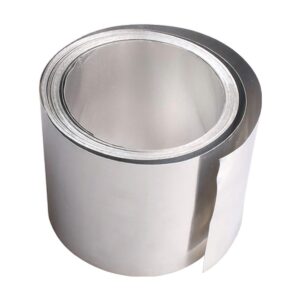
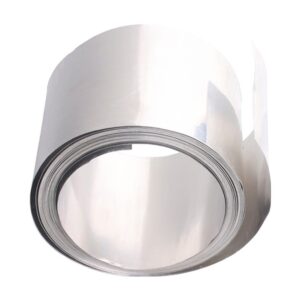
| Packing | Vacuum-sealed, argon flushed; spool or flat pack in a foam-lined case |
| MOQ | By agreement — quoted per order |
| Lead time | 10–20 working days |
Tolerances and handling
- Foil thickness determines the bond line; 0.1–0.2 mm is typical for target bonding.
- Indium foil must be oxide-free for reliable wetting — store sealed and use within shelf life.
- For large targets, the foil is usually cut to the target footprint with a small overlap.
End applications
- Sputtering target bonding (indium bond)
- Vacuum and cryogenic gaskets
- Heat-spreading interface
- Evaporation source
Frequently asked
What foil thickness for target bonding?
0.1–0.2 mm for most targets; the exact value depends on the target area and the flatness of both surfaces.
Can you supply indium foil cut to shape?
Yes — die or laser cut to the target footprint, quoted against the drawing.
Related reading: all wire, foil and solder products · high-purity evaporation materials
Related resources
- Applications — where this material is used, by industry.
- Deposition methods — e-beam vs thermal, liner choice, pre-melt and defect fixes.
- Crucible fill calculator — how much charge fits in the liner.
- Film material calculator — material needed for a given thickness.
Reviews
There are no reviews yet.