
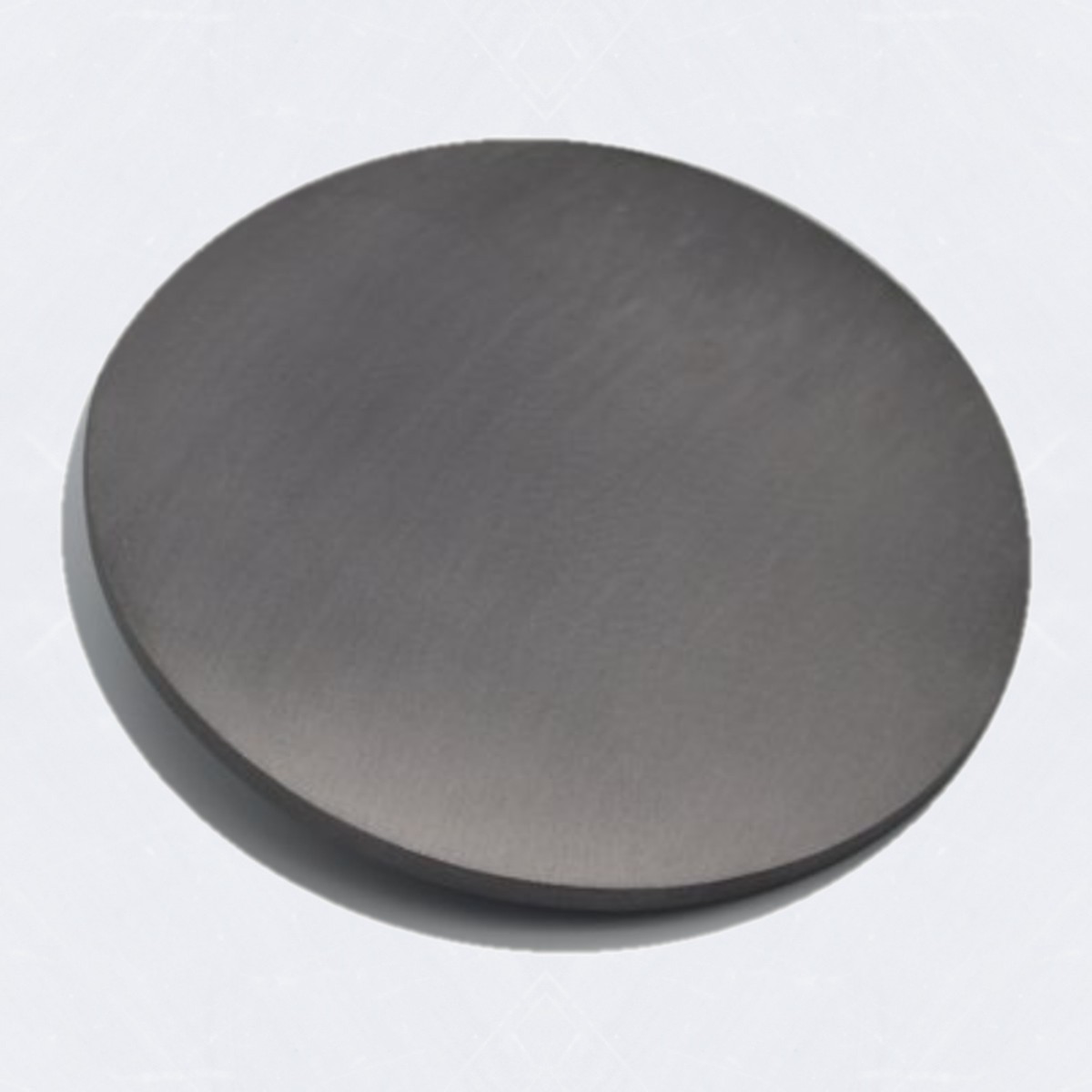
Copper oxide targets are used in research on p-type transparent conductors, in solar cell absorbers and in gas sensors. Copper exists in two stable oxides — CuO and Cu2O — and the target phase determines which film you can deposit.
Specification
| Composition | CuO |
|---|---|
| Purity | 99.9% |
| Density | 6.31 g/cm³ |
| Melting point | 1326 °C |
| Form | Discs 2″, 3″, 4″, 6″, 8″ · plates to drawing · rotatables on request |
| Bonding | Indium or elastomer to Cu backing; bond coverage checked |
| Packing | Vacuum-sealed, foam-lined case with density and stoichiometry report |
| MOQ | 1 pc |
| Lead time | 20–30 working days |
What decides the film
- CuO and Cu2O are different targets, not different processes — specify the phase.
- Copper oxide targets are semiconductors; RF sputtering is normal.
- Phase purity affects the film band gap and conductivity type.
End applications
- p-type transparent conductor research
- Solar absorber layers
- Gas sensors
- Photocatalytic films
Frequently asked
What is the difference between CuO and Cu2O targets?
CuO (cupric) is the black, higher oxide; Cu2O (cuprous) is red-brown. They give different films and different band gaps.
Are these targets used in production?
Mainly in research and in sensor production; the phase purity is what matters.
Related reading: targets for optical coatings · ITO vs AZO vs IGZO · all ceramic targets
Related resources
- Applications — where this material is used, by industry.
- Deposition methods — e-beam vs thermal, liner choice, pre-melt and defect fixes.
- Crucible fill calculator — how much charge fits in the liner.
- Film material calculator — material needed for a given thickness.
Reviews
There are no reviews yet.