
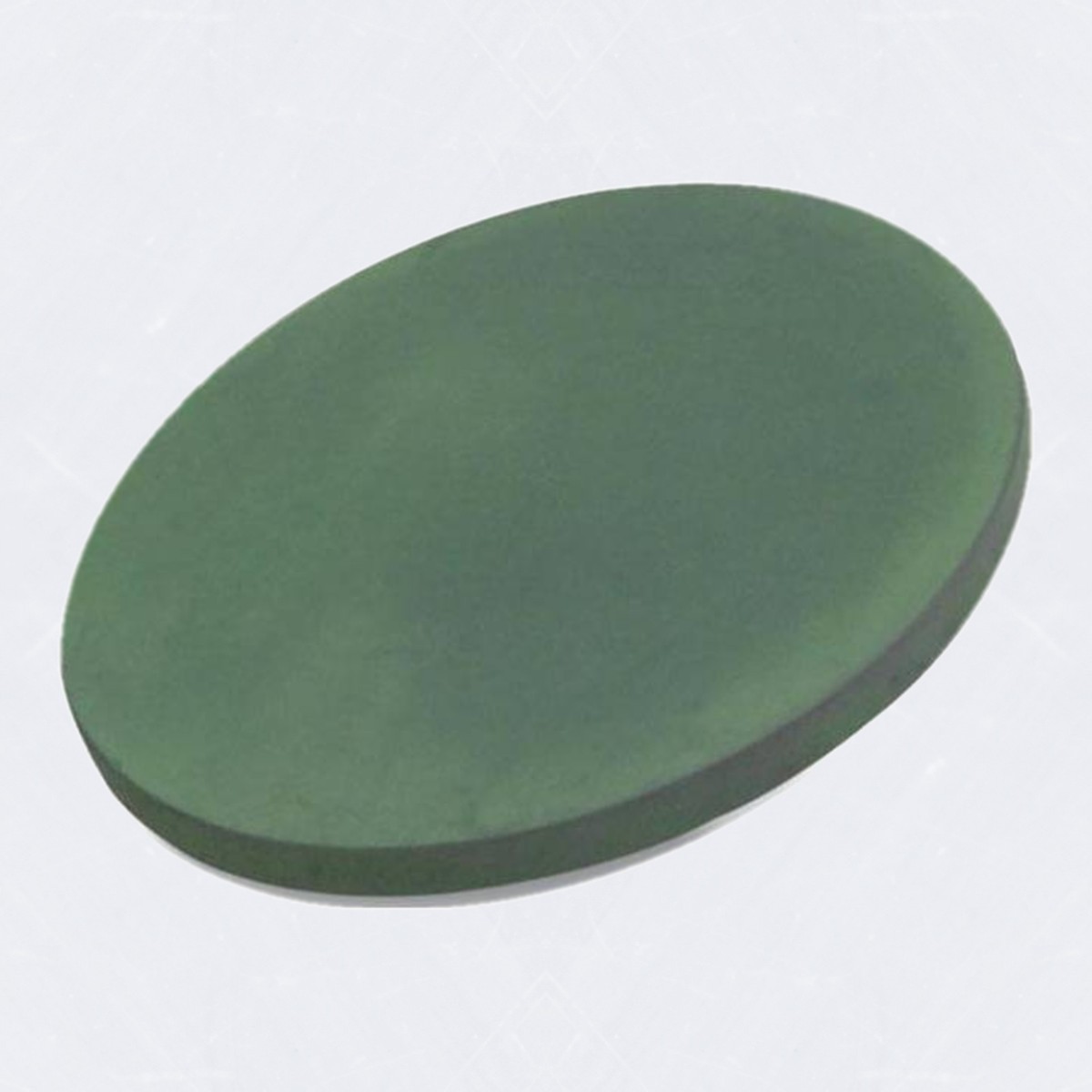
Nickel oxide is a p-type semiconductor used as a hole-transport layer in perovskite solar cells, as an electrochromic layer and as a gas-sensor material. Because it is a semiconductor, the nickel-to-oxygen ratio matters more than the trace metal total.
Specification
| Composition | NiO |
|---|---|
| Purity | 99.9% |
| Density | 6.67 g/cm³ |
| Melting point | 1955 °C |
| Form | Discs 2″, 3″, 4″, 6″, 8″ · plates to drawing · rotatables on request |
| Bonding | Indium or elastomer to Cu backing; bond coverage checked |
| Packing | Vacuum-sealed, foam-lined case with density and stoichiometry report |
| MOQ | 1 pc |
| Lead time | 20–30 working days |
What decides the film
- Stoichiometry controls conductivity type and carrier concentration.
- NiO targets are insulating when stoichiometric — RF sputtering, with an oxygen-controlled process.
- For perovskite work, the film quality depends on the target density and the post-anneal.
End applications
- Hole-transport layers in perovskite solar cells
- Electrochromic devices
- Gas sensors
- p-type transparent conductors
Frequently asked
Why is NiO used in perovskite cells?
It transports holes and blocks electrons, and it is chemically stable against the perovskite layer. The film must be thin and pinhole-free.
Can NiO be sputtered reactively from nickel?
Yes, from a nickel metal target with oxygen. A ceramic NiO target gives a fixed stoichiometry and simpler control.
Related reading: targets for optical coatings · ITO vs AZO vs IGZO · all ceramic targets
Related resources
- Applications — where this material is used, by industry.
- Deposition methods — e-beam vs thermal, liner choice, pre-melt and defect fixes.
- Crucible fill calculator — how much charge fits in the liner.
- Film material calculator — material needed for a given thickness.
Reviews
There are no reviews yet.