
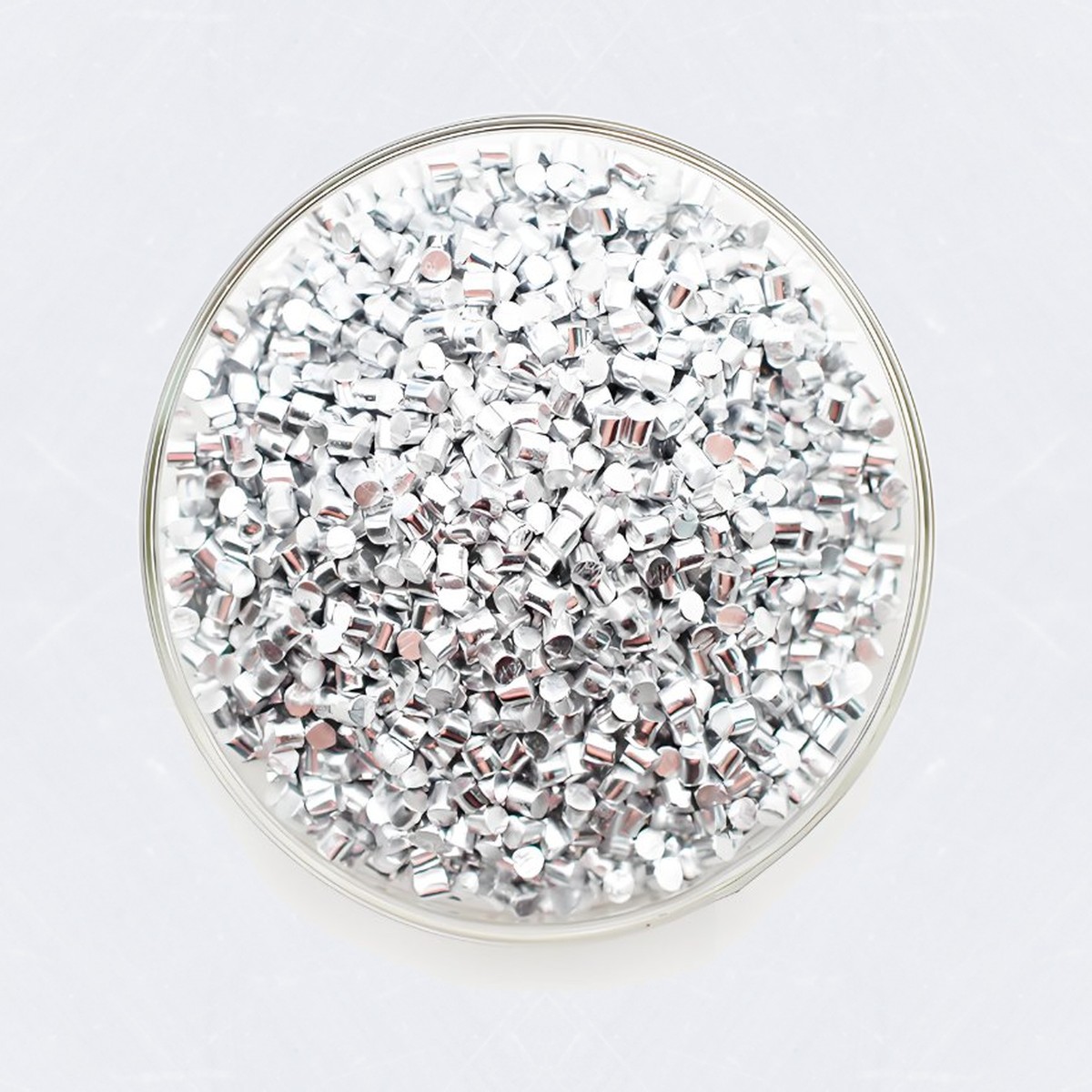
Silver evaporates at a modest temperature and gives the highest reflectance of any metal, which makes it the standard material for low-E and mirror coatings. The difficulty is not evaporation but what happens afterwards: silver films agglomerate and tarnish unless they are capped.
Specification
| Material | Silver (Ag) |
|---|---|
| Purity | 4N (99.99%) |
| Melting point | 962 °C |
| Density | 10.49 g/cm³ |
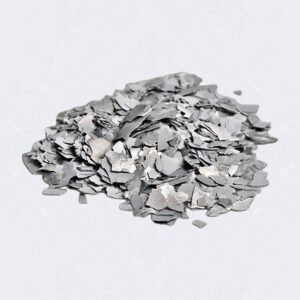
| Form | Pellets, granules or pieces; custom preforms to drawing |
| Packing | Vacuum-sealed, argon flushed; 1 kg per bag |
| MOQ | 100 g (samples from 10 g) |
| Lead time | 10–20 working days |
Evaporation notes
- Use a graphite or BN liner; silver wets most metals and will alloy with a tungsten boat.
- Keep the substrate cool — silver films dewet and agglomerate if annealed too hard.
- Sulphur and chlorine in the target cause hazy films; ask for both on the certificate.
End applications
- Low-E and solar-control glass
- Mirror and reflective coatings
- Electrical contacts
- Optical filters
Frequently asked
Why does my silver film go cloudy?
Usually sulphur or chlorine from the target, or oxidation at the interfaces. A protective cap layer on both sides stops it.
Can silver be evaporated from a tungsten boat?
It can, but silver alloys with tungsten; a graphite or BN liner gives a longer boat life.
Related reading: e-beam evaporation materials guide · all high-purity evaporation materials
Related resources
- Applications — where this material is used, by industry.
- Deposition methods — e-beam vs thermal, liner choice, pre-melt and defect fixes.
- Crucible fill calculator — how much charge fits in the liner.
- Film material calculator — material needed for a given thickness.
Reviews
There are no reviews yet.