
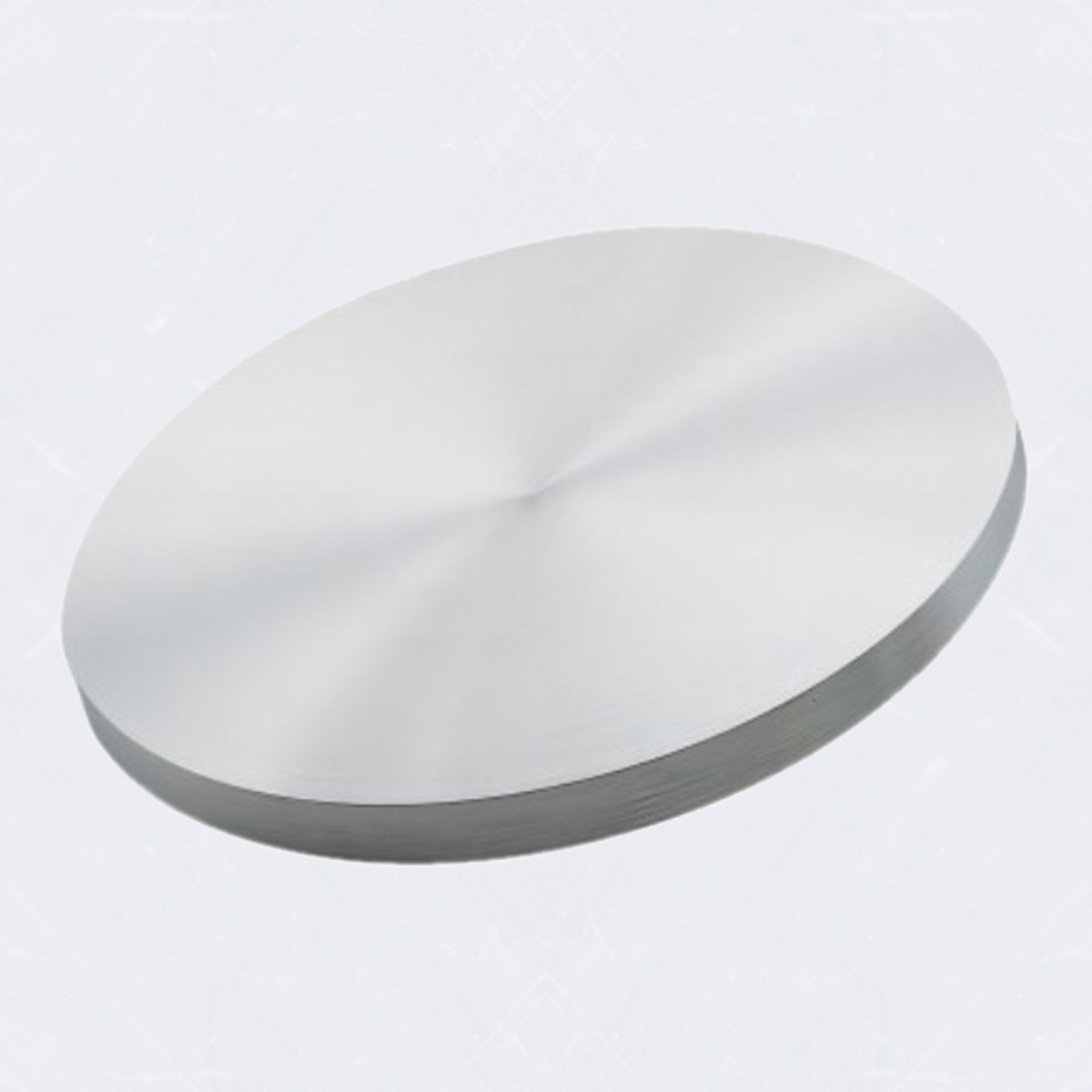
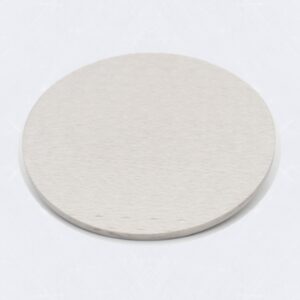
Zinc targets are the base for ZnO and, when doped, for transparent conductors. Zinc also has a low melting point and a high vapour pressure, so it sputters at modest power and is easy to overheat — the opposite problem to refractory metals.
Specification
| Material | Zinc (Zn) |
|---|---|
| Purity | 4N–5N (99.99–99.999%) |
| Density | 7.14 g/cm³ |
| Melting point | 420 °C |
| Form | Discs 2″, 3″, 4″, 6″, 8″, 12″ · rectangular plates to drawing |
| Grain / texture | Fine grain; stated on request |
| Bonding | Indium or elastomer to Cu / Al backing, bond coverage checked |
| Packing | Vacuum-sealed, foam-lined case with flatness record |
| MOQ | 1 pc |
| Lead time | 15–25 working days |
Sputtering notes
- Low melting point — keep the power density down or the target will deform.
- Zinc oxidises readily; a pre-sputter step and sealed storage are both necessary.
- For AZO, aluminium-doped targets are specified rather than pure zinc.
End applications
- ZnO and AZO transparent conductive films
- Buffer layers in solar cells
- Decorative and corrosion-resistant coatings
- Piezoelectric ZnO films
Frequently asked
Why does my zinc target deform?
Overheating. Zinc melts at 420 °C and has a high vapour pressure; exceeding a modest power density softens the surface and changes the erosion profile.
Related reading: target specification guide · all metal sputtering targets
Related resources
- Applications — where this material is used, by industry.
- Deposition methods — e-beam vs thermal, liner choice, pre-melt and defect fixes.
- Crucible fill calculator — how much charge fits in the liner.
- Film material calculator — material needed for a given thickness.
Reviews
There are no reviews yet.