
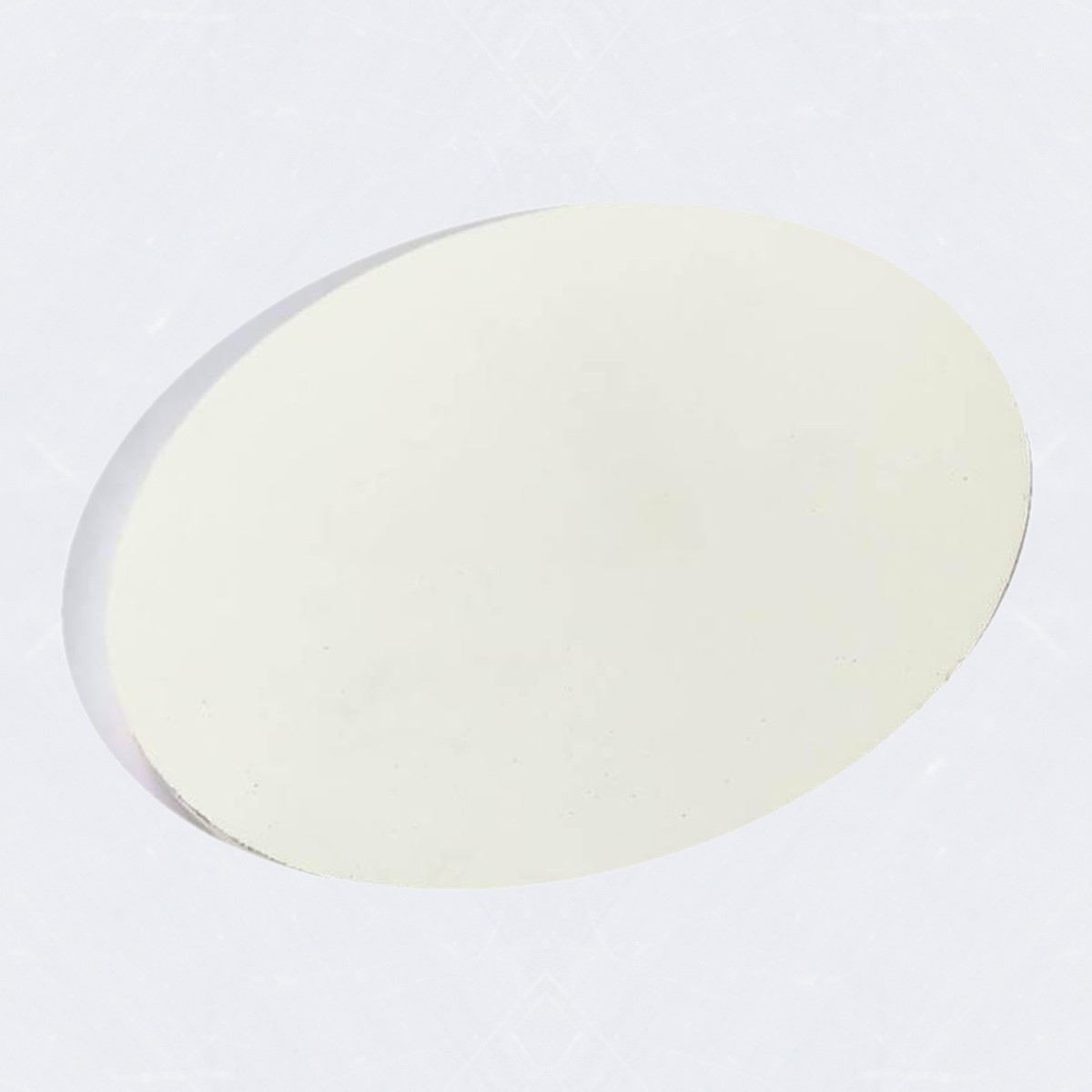
Hafnium dioxide is the UV-capable high-index material: it transmits further into the ultraviolet than Ta2O5 or TiO2, and it has the highest laser damage threshold of the common oxides. It is also a high-k dielectric in semiconductor work.
Specification
| Composition | HfO2 |
|---|---|
| Purity | 99.9–99.99% |
| Density | 9.68 g/cm³ |
| Melting point | 2758 °C |
| Form | Discs 2″, 3″, 4″, 6″, 8″ · plates to drawing · rotatables on request |
| Bonding | Indium or elastomer to Cu backing; bond coverage checked |
| Packing | Vacuum-sealed, foam-lined case with density and stoichiometry report |
| MOQ | 1 pc |
| Lead time | 20–30 working days |
What decides the film
- The material of choice for UV and high-power laser coatings.
- Very high melting point — density and bonding decide whether the target survives.
- Hafnium is expensive; utilisation and reclaim matter.
End applications
- UV and excimer laser optics
- High-power laser coatings
- High-k dielectrics
- Anti-reflection coatings for deep UV
Frequently asked
Why HfO2 for UV coatings?
It transmits where Ta2O5 and TiO2 absorb, and its laser damage threshold is higher. The trade-off is cost and deposition rate.
Is nuclear-grade hafnium-free zirconium relevant here?
That concerns zirconium metal, not HfO2. For HfO2, the specification is purity and phase.
Related reading: targets for optical coatings · ITO vs AZO vs IGZO · all ceramic targets
Related resources
- Applications — where this material is used, by industry.
- Deposition methods — e-beam vs thermal, liner choice, pre-melt and defect fixes.
- Crucible fill calculator — how much charge fits in the liner.
- Film material calculator — material needed for a given thickness.
Reviews
There are no reviews yet.